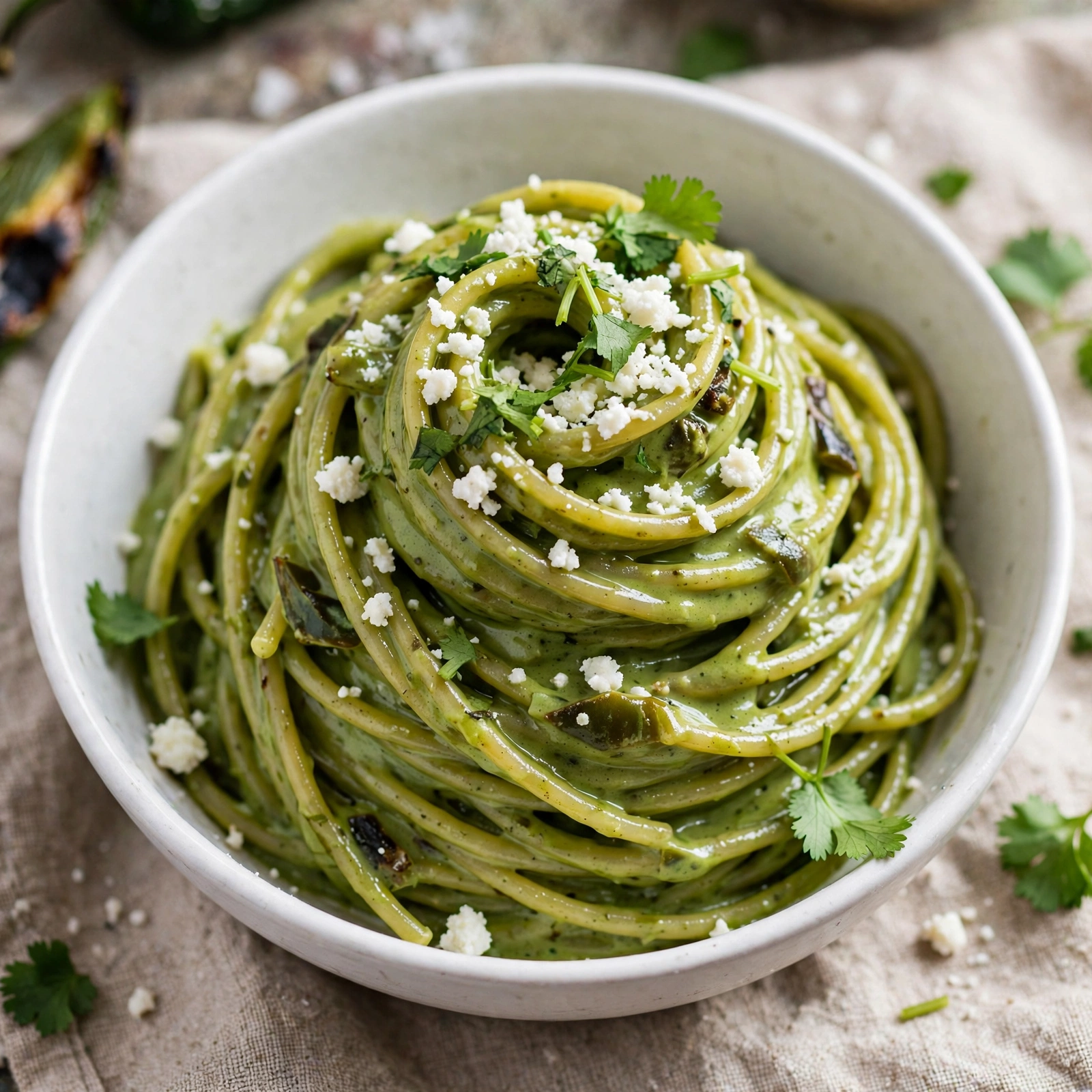
5 Green Spaghetti Recipes (Creamy Roasted Poblano Pasta)
Espagueti verde — Mexico’s silky roasted-poblano cream pasta — is surging in American kitchens: a 30-minute weeknight pasta that tastes like a $24 restaurant plate. Smoky, gently warm, and luxuriously creamy, it coats every strand of spaghetti like velvet.
Why You’ll Love This Green Spaghetti
This is not pesto’s cousin. Green spaghetti gets its character from poblano peppers charred until their skins blacken and blister, then blended with cream cheese, Mexican crema, and garlic until completely silky. The char develops real smoke compounds, so the sauce has a depth that tastes like it simmered for hours, not minutes.
The timeline is the other selling point: about 30 minutes from the moment the pasta water goes on, most of it hands-off charring time. And it sits at a delicious crossroads — Italian pasta technique (emulsified sauce, starchy pasta water) filled with Mexican flavors (poblano, crema, cotija, cilantro). Mild by default with a built-in spice dial, it works for picky kids and dinner guests alike. One base recipe, five riffs.
Ingredients You’ll Need
Serves 4–6; the variations below build on this base.
- 1 lb spaghetti (bronze-cut grips sauce best)
- 6 large poblano peppers (about 1½ lb), firm and glossy
- 2 tbsp olive oil, divided
- 6 garlic cloves, peeled
- 1 small white onion (about 6 oz), quartered
- 8 oz cream cheese, softened 30 minutes at room temperature
- ½ cup Mexican crema (or sour cream thinned with 1 tbsp milk)
- 1 cup low-sodium chicken or vegetable broth, plus more as needed
- 1 tsp kosher salt, plus more for the pasta water
- ½ tsp black pepper
- ¼ tsp ground cumin
- ¾ cup reserved pasta water (scoop out before draining)
- ½ cup crumbled cotija, for serving
- ¼ cup chopped cilantro, for serving
- Lime wedges, for serving
How to Make Green Spaghetti
- Char the poblanos — 12 to 15 minutes. Broiler HIGH, rack 4–6 inches from the element. Toss poblanos with 1 tbsp oil on a foil-lined pan; broil, turning every 3–4 minutes, until skins are fully blackened and blistered — black and papery, puffed from the flesh. Pale patches mean raw, grassy flavor in the sauce.
- Steam and peel — 10 minutes. Cover the hot poblanos in a heatproof bowl; rest 10 minutes so skins slip off in sheets. Peel, remove stems, split open, and scrape out ALL seeds and white ribs — that’s where bitterness hides. Chop.
- Roast the garlic base — 8 minutes. Warm remaining 1 tbsp oil in a skillet over medium-low. Cook garlic and onion gently, turning, until soft and golden at the edges — you’re coaxing out sweetness; scorched garlic turns the whole sauce bitter.
- Blend the sauce while hot — 2 minutes. Blender: garlic, onion, poblanos, cream cheese, crema, broth, salt, pepper, cumin. Blend on high 60–90 seconds until completely silky. Blending hot melts the cream cheese’s fat so it emulsifies fully.
- Cook the pasta — 9 to 11 minutes. Boil spaghetti in well-salted water, 1 minute under the package’s al dente time. Scoop out 1 cup of starchy pasta water before draining. Do not rinse.
- Marry pasta and sauce — 2 minutes. Warm the sauce in the empty pot over medium-low until it just steams — never boil. Add spaghetti; toss 1–2 minutes with pasta water a quarter cup at a time until every strand glistens and the sauce clings.
- Serve immediately in warm bowls with cotija, cilantro, and lime wedges — the sauce is at its silkiest fresh.
Tips for the Best Green Spaghetti Every Time
Use our double poblano method. Char four poblanos hard under the broiler for deep smoke, and roast the other two gently with the garlic and onion until soft and sweet. Charred peppers develop Maillard browning and smoke compounds on the blackened skin; gently roasted ones keep their sweetness and vivid green color. Blended together: smoke AND sweetness AND color, with zero extra time.
Char hard, steam, de-seed ruthlessly. Under-charring is the top mistake: unblackened skin won’t peel and grinds into the sauce as tough flecks with a raw, grassy taste. Black is the goal — the flesh is protected. Steam in the covered bowl so heat and moisture dissolve the pectin bonds holding skin to flesh, letting skins slip off in sheets. Scrape out every seed and rib; the ribs carry bitter alkaloids that surface as an aftertaste in a sauce this smooth.
Blend hot, then never boil. Cream cheese emulsifies into hot liquid far more readily — heat melts its fat phase so it disperses evenly, which is why we blend straight from the skillet. But once blended, keep the sauce at a bare simmer when the pasta goes in: a rolling boil splits cream sauces, tightening proteins until they squeeze out fat, and no stirring fixes the graininess. If it splits slightly, whisk a spoonful of cold crema in off the heat.
Dial the heat; use the pasta water. Poblanos run 1,000–2,000 Scoville units — milder than a jalapeño — but they vary, so taste a sliver of raw flesh first. For milder sauce, remove every trace of rib and seed, where most heat lives; for more kick, leave a few seeds in or add half a serrano to the blender. Don’t skip the pasta water: its starch emulsifies the sauce’s fat into its water, turning the sauce glossy so it clings.
Easy Variations
Master the base, then riff:
1. Chicken Green Spaghetti. Season 1 lb chicken breast strips with salt, pepper, and ½ tsp cumin; sear in 1 tbsp hot oil until golden and 165°F inside, about 6 minutes. Slice and toss through the finished pasta.
2. Shrimp Green Spaghetti. Pat 1 lb large shrimp very dry; season with salt and a pinch of cayenne. Sear in a ripping-hot skillet 90 seconds per side until just pink, then fold through the sauced pasta off the heat — residual heat finishes them gently.
3. Roasted Corn Green Spaghetti. Roast kernels from 2 ears of corn (or 1½ cups thawed frozen) at 425°F for 12–15 minutes until charred in spots; stir through with the cotija — excellent at room temperature for potlucks.
4. Extra-Spicy Serrano Green Spaghetti. Add 1–2 serranos (stems off, seeds in) to the blender; finish with sliced fresh serrano. Serranos run 10,000–23,000 Scoville units — one is a real kick, two is fiery. Balance with an extra ¼ cup of crema, since dairy fat is the best fire extinguisher.
5. Vegan Cashew-Cream Green Spaghetti. Soak 1 cup raw cashews in boiling water 30 minutes; drain and blend with the poblanos, garlic, onion, ¾ cup vegetable broth, 2 tbsp nutritional yeast, and juice of half a lime until completely smooth. Finish with pasta water and toasted pepitas instead of cotija — the cashews’ natural fat emulsifies into a sauce every bit as silky as the dairy version.
Storage and Reheating
Fridge: Airtight container, up to 4 days. The sauce thickens overnight as starches absorb liquid — normal.
Freezer: Sauce only (cooked noodles go mushy), up to 3 months. Press flat in a zip-top bag or use ice cube trays; thaw overnight, then toss with freshly cooked spaghetti.
Reheating: Never blast on high — violent heat splits cream sauces. Warm gently in a skillet over LOW heat with a splash of milk or broth (1–2 tbsp per serving), stirring constantly until silky again, 3–4 minutes. The added liquid lets the emulsion reform instead of breaking.
Frequently Asked Questions
Can I use canned poblanos? You can, but you trade away the smoke — the soul of this dish. If you must, drain and pat them very dry and add ½ tsp smoked paprika to the blender to fake some char.
Why is my sauce bitter? Usually leftover seeds and white ribs, or under-charred skin blended in instead of peeled off. The rarer culprit is scorched garlic — past golden to dark brown, it poisons the whole batch.
How spicy are poblanos? Barely — 1,000–2,000 Scoville units versus 2,500–8,000 for a jalapeño. Most people, kids included, find the sauce warming rather than hot.
Can I make the sauce ahead? Yes — blend, cool, and refrigerate up to 5 days. Rewarm gently over low heat, whisking in a splash of broth until pourable, then boil fresh pasta.
What if I can’t find cotija? Most US supermarkets carry it now. In a pinch, use crumbled feta (saltier, tangier, same crumbly job) or finely grated Parmesan. Skip melty cheeses like mozzarella; the contrast of salty crumbles against silky sauce is the point.
Why is my sauce thin? Three suspects: no reserved pasta water (the starch gives body and cling), over-thinning with milk or broth, or boiling the sauce and breaking the emulsion. Simmer gently 2–3 minutes to reduce, then toss with pasta plus a good glug of pasta water.
Nutrition Estimate
Estimate only — actual values vary by brand, ingredient choices, and portion size. Not medical or dietary advice.
Per serving (6 servings), base recipe, approximately: 520 calories, 15 g protein, 68 g carbs, 21 g fat (11 g saturated), 4 g fiber, 480 mg sodium, 6 g sugars. Cream cheese and crema drive most of the fat; chicken or shrimp versions add roughly 25–30 g protein per serving.
The Bottom Line
Green spaghetti earns its moment: a 30-minute pasta with slow-sauce depth, a built-in spice dial for every eater, and a technique — char, steam, blend hot, finish with pasta water — that makes you a better cook across dozens of dishes. Make the base once, work through all five variations, and find your house version. The trend will fade; this one stays in the rotation.