5 Mashed Potato Casserole Recipes (Make-Ahead Holiday Sides)
Why You’ll Love This Mashed Potato Casserole
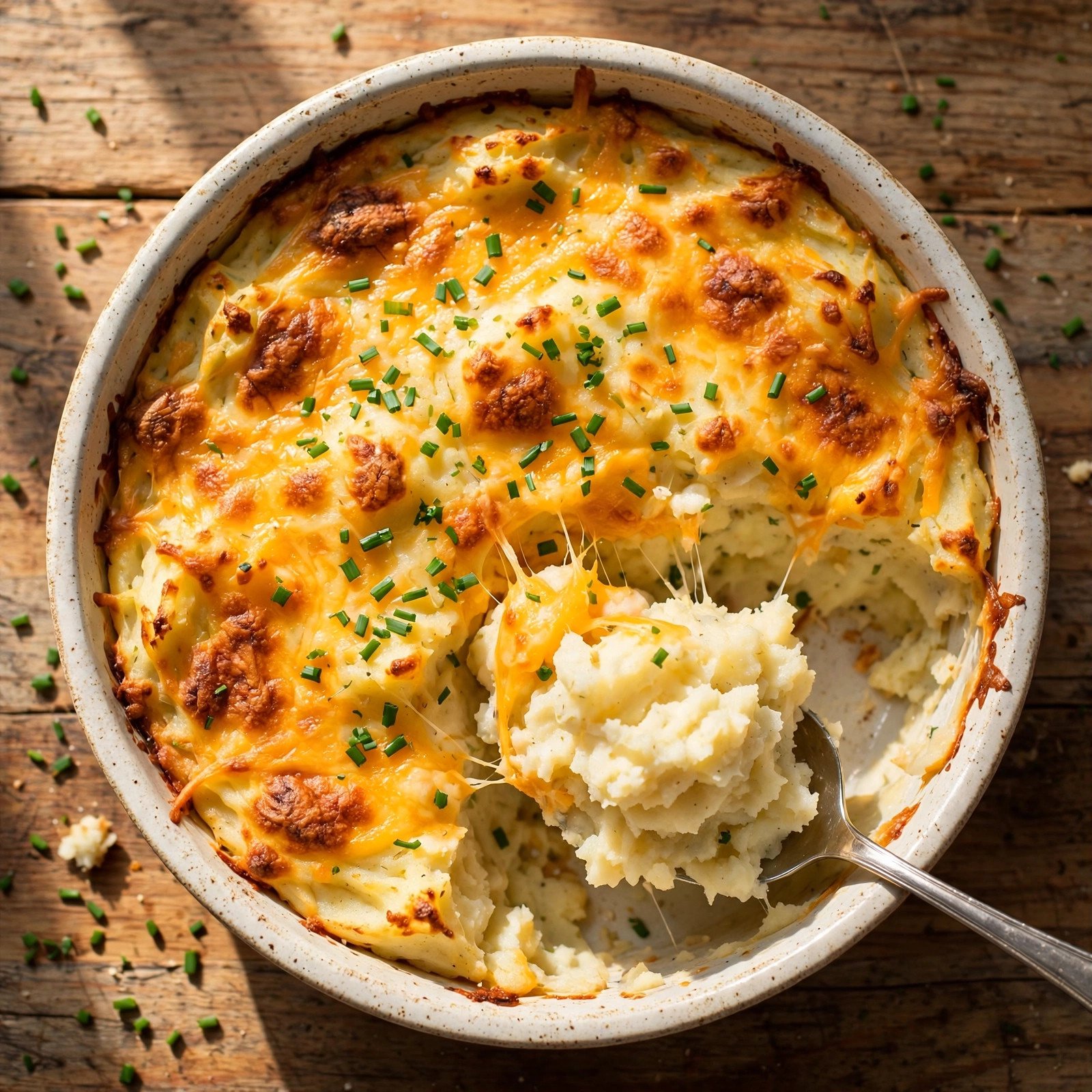
Every holiday table needs one dish that holds everything together, and this mashed potato casserole is that dish. It turns classic mashed potatoes into something richer and more practical: a creamy, cheesy casserole you assemble a day ahead, bake until golden, and serve while the turkey rests. No last-minute mashing while gravy thickens and guests arrive.
What sets this version apart is its texture. Many recipes go all cream cheese and turn gluey, or all butter and milk and dry out. This one uses warm whole milk for lightness, sour cream for tang and body, and cream cheese for a velvety structure that holds its shape when scooped. The inside stays fluffy, the top bakes golden and lightly crisp under sharp cheddar, and the flavor deepens overnight. It also solves the oven-space problem: it bakes at 350 degrees Fahrenheit alongside a turkey, and one dish feeds a crowd.
Ingredients You’ll Need
This base recipe fills one 9 by 13 inch dish and serves 10 to 12 people. Measure the dairy carefully: too much liquid is the top cause of a soupy casserole.
- 5 pounds russet potatoes, peeled and cut into even 2 inch chunks
- 1 tablespoon kosher salt, plus more for the cooking water
- 3/4 cup (1 1/2 sticks) unsalted butter, divided
- 8 ounces cream cheese, softened to room temperature
- 1 cup sour cream
- 3/4 cup whole milk, warmed
- 2 cups shredded sharp cheddar cheese, divided
- 1 teaspoon garlic powder
- 1/2 teaspoon black pepper
- 1/4 teaspoon ground nutmeg (optional)
- 2 tablespoons chopped fresh chives, for garnish
- Butter or cooking spray, for the dish
Russets are the right choice: their high starch breaks down into a dry, fluffy mash that absorbs butter and cream without turning gummy. Yukon Golds work but hold more moisture, so cut the milk to 1/2 cup. Waxy red potatoes stay dense and are a poor fit here.
How to Make Mashed Potato Casserole
- Grease a 9 by 13 inch baking dish. If baking now, preheat the oven to 350 degrees Fahrenheit.
- Put the potato chunks in a large pot, cover with cold water by 1 inch, and add a generous tablespoon of salt. Cold water helps the potatoes cook evenly, so the outsides do not turn mushy while the centers stay chalky.
- Boil over high heat, then simmer on medium for 18 to 22 minutes, until a fork slides into the largest chunk with no resistance. Drain well and let the potatoes steam-dry for 2 minutes. Dry potatoes absorb butter far better than wet ones.
- Return the potatoes to the warm pot with 1/2 cup of butter and mash with a masher or ricer until mostly smooth. Never use a food processor or a mixer on high speed: overworking bursts the starch cells and turns potatoes into a sticky paste.
- Add the cream cheese, sour cream, warmed milk, 1 cup of cheddar, garlic powder, pepper, and nutmeg. Fold until just combined and creamy. Taste and adjust the salt. If the mixture seems stiff, add warm milk 2 tablespoons at a time.
- Spread the mixture into the dish and smooth the top. Drag a fork lightly across the surface to make ridges, which crisp and brown in the oven. Top with the remaining 1 cup of cheddar and dot with the remaining 1/4 cup of butter.
- To bake now: cover loosely with foil and bake at 350 degrees Fahrenheit for 25 minutes. Uncover and bake 15 to 20 minutes more, until the cheese bubbles, the edges are golden brown, and the center reaches 165 degrees Fahrenheit. Rest for 10 minutes so the casserole sets enough to scoop cleanly.
- To make ahead: cover the unbaked casserole tightly and refrigerate for up to 2 days. Before baking, let it stand at room temperature for 30 minutes, then bake covered at 350 degrees Fahrenheit for 35 minutes, uncover, and bake 15 to 20 minutes more until bubbling and golden. Garnish with chives.
Tips for the Best Mashed Potato Casserole Every Time
Warm your milk first: cold milk cools the potatoes and forces extra stirring, and extra stirring develops gluey starch. Bring the cream cheese to room temperature too, so it melts in completely instead of leaving white flecks. Salt the cooking water generously and salt again after mashing, since potatoes need more salt than most cooks expect, and baking and chilling both mute seasoning. Do not skip the 10 minute rest after baking; it lets the starches firm up so each scoop holds its shape. If the top browns before the center is hot, tent the dish loosely with foil and keep baking.
Easy Variations
Each variation starts with the same base; only the additions change.
1. Classic Cheesy Mashed Potato Casserole
The base recipe as written: cream cheese, sour cream, and sharp cheddar, baked until golden. The safest crowd-pleaser for picky eaters and large groups.
2. Loaded Baked Potato Casserole
Fold in 8 slices of cooked, crumbled bacon and 4 sliced green onions, then top with extra cheddar and 4 more slices of bacon. Serve with sour cream and green onions.
3. Garlic and Herb Mashed Potato Casserole
Swap the garlic powder for 4 cloves of roasted garlic, mashed to a paste, add 2 tablespoons each of chopped rosemary and thyme, and swap half the cheddar for Parmesan. Roasted garlic turns sweet and mellow, while raw garlic can taste harsh after baking.
4. Bacon and Three-Cheese Mashed Potato Casserole
Replace the cheddar with 2/3 cup each of cheddar, Monterey Jack, and Gruyere, and add 6 slices of crumbled bacon. Gruyere adds nutty depth; Monterey Jack keeps the top stretchy and golden.
5. Duchess-Style Piped Mashed Potato Casserole
Stir 2 beaten egg yolks into the warm potatoes so they hold their shape, pipe swirls with a large star tip, brush with melted butter, and bake uncovered at 400 degrees Fahrenheit for 20 to 25 minutes until the peaks are deeply golden.
Storage and Reheating
Refrigerate the baked casserole, covered, for up to 4 days. Reheat single servings in the microwave on 50 percent power for 2 to 3 minutes, stirring halfway through, with a splash of warm milk if it looks dry. Reheat the whole dish covered in a 325 degree Fahrenheit oven for 25 to 30 minutes, until the center reaches 165 degrees Fahrenheit, then uncover for 5 minutes to re-crisp the top. To freeze, wrap the unbaked casserole tightly and freeze for up to 3 months, then thaw overnight in the refrigerator and bake as directed, adding 10 minutes to the covered time. Avoid reheating at full microwave power, which makes potatoes rubbery.
Frequently Asked Questions
Can I make mashed potato casserole ahead of time?
Yes. Assemble it up to 2 days ahead, cover tightly, and refrigerate. Let it stand at room temperature for 30 minutes before baking and add about 10 minutes to the covered baking time.
Why did my casserole turn out gummy?
Overworking is almost always the cause. A food processor, a high-speed mixer, or mashing far past smooth bursts the starch cells. Use a ricer or hand masher, stop once smooth, and fold the dairy in gently.
Can I use instant mashed potatoes?
You can in a pinch, but the texture will be softer and less structured. Prepare them thick with butter and warm milk, stir in the cream cheese, sour cream, and cheddar, and bake as directed, adding dairy gradually so the mixture does not turn soupy.
How do I keep the casserole from drying out?
Bake it covered first so steam stays inside, uncovering only for the final 15 to 20 minutes to brown the top. If your oven runs hot, check it 5 minutes early.
Can I make this casserole gluten-free?
Yes, naturally. The base recipe is gluten-free as written; just check bacon and cheese labels for the loaded and three-cheese versions, since some brands add gluten-containing flavorings.
What size dish should I use if I halve the recipe?
Halve every ingredient and use an 8 by 8 inch dish at the same temperature, baking covered for about 20 minutes and uncovered for 10 to 15 minutes, until the center reaches 165 degrees Fahrenheit.
Nutrition Estimate
Per serving (12 servings): approximately 380 calories, 21 grams of fat, 38 grams of carbohydrates, 9 grams of protein, and 520 milligrams of sodium. This is an estimate only, based on standard ingredient values; actual nutrition varies with brands and the variation chosen. This is general guidance only, not medical or dietary advice.
The Bottom Line
This casserole earns its place on the holiday table by being better and easier than the dish it replaces: creamier than plain mashed potatoes, beautiful from the oven, and free of last-minute mashing on the busiest cooking day of the year. Build it ahead, bake it golden, and it will be the one dish you never worry about, whether you keep it classic, load it with bacon, or pipe it into golden swirls.