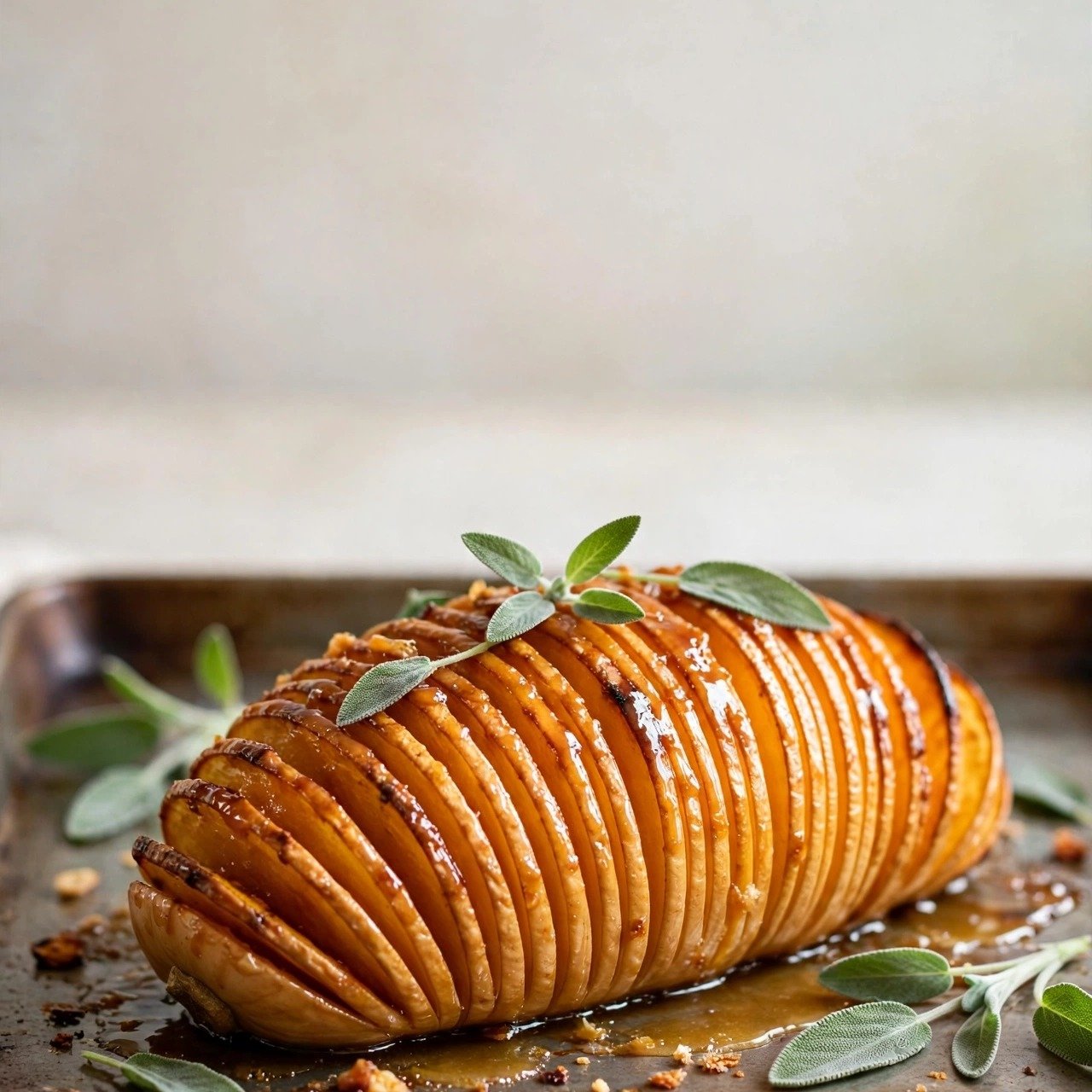
Why You’ll Love This Hasselback Butternut Squash
Hasselbacking is the trick that turns a humble squash into a showpiece. By slicing almost, but not quite, all the way through, you create dozens of thin pages that crisp at the edges, soak up glaze in the gaps, and fan open in the oven like an accordion. A whole roasted squash can be soft and one-note; a hasselback squash is crisp, caramelized, buttery, and tender all at once, and it looks like it took far more effort than it did.
The technique is forgiving once you know two things: how to keep the knife from cutting through, and how to roast in two stages so the inside goes tender before the glaze burns. Below are five versions built on that base, from a simple maple-butter classic to a cheesy, bacon-topped crowd-pleaser. Any one of them can sit proudly next to the turkey.
Ingredients You’ll Need
For the classic version, gather: 1 large butternut squash (about 3 lb), 4 tablespoons unsalted butter melted, 3 tablespoons maple syrup, 1 tablespoon olive oil, 1 teaspoon kosher salt, 1/2 teaspoon black pepper, 1/2 teaspoon ground cinnamon, 8-10 fresh sage leaves, and 2 tablespoons chopped pecans for serving. You will also need two wooden spoons or chopsticks to use as cutting guides. The variations add ingredients like brown butter, goat cheese, chili crisp, Parmesan, or crumbled bacon, but every version starts with the same squash, butter, and maple base.
How to Make Hasselback Butternut Squash
- Prep the squash. Heat the oven to 400°F. Peel the squash, cut it in half lengthwise, and scoop out the seeds. Place each half cut-side down on a board. This flat base is what keeps it stable while you slice.
- Slice hasselback-style. Lay a chopstick or wooden spoon handle on each long side of the squash half. Slice crosswise every 1/4 inch, letting the guides stop the knife about 1/4 inch above the board. Do not rush; even, thin slices fan better than thick ones. If a slice does cut through, just tuck it back in place.
- First roast. Brush the halves generously with olive oil and season with salt and pepper. Roast cut-side up for 25 minutes, until the slices just begin to separate. This first roast softens the squash so the glaze can seep between the slices.
- Glaze and finish. Whisk the melted butter, maple syrup, and cinnamon. Brush it over and between the slices, tucking sage leaves into a few gaps. Return to the oven for 25-30 minutes more, basting once halfway through, until the squash is fork-tender all the way through and the edges are deeply caramelized.
- Rest and serve. Rest 5 minutes, then spoon any pan glaze over the top and scatter with pecans. Slice between the fan lines at the table, or serve each half whole for a dramatic centerpiece.
Five Hasselback Butternut Squash Recipes to Make
1. Maple-Butter Classic. The recipe above, exactly as written. It is sweet, buttery, and spiced just enough to taste like fall without tasting like dessert.
2. Brown Butter and Sage. Brown the butter in a light-colored pan over medium heat, swirling, until the milk solids turn amber and smell nutty, about 3-4 minutes. Use it in place of plain melted butter and double the sage. The nutty butter is the whole point here.
3. Hot Honey and Chili Crisp. Replace the maple syrup with hot honey and brush 1 tablespoon chili crisp over the squash in the last 10 minutes. Sweet, spicy, and crunchy, this is the version for guests who love bold flavors.
4. Parmesan and Herb Crust. After the first roast, brush with butter and shower with 1/2 cup finely grated Parmesan and 1 tablespoon chopped thyme. The cheese crisps into a savory crust in the second roast; watch it closely in the last 10 minutes so it browns, not burns.
5. Bacon and Goat Cheese. Top the finished squash with 4 slices of crisp crumbled bacon and 4 oz crumbled goat cheese, then return to the oven for 5 minutes, just until the cheese softens. Salty, tangy, and rich, this one eats like a main course for vegetarians who eat dairy.
Tips for the Best Hasselback Squash Every Time
Pick a squash with a long, straight neck; it slices more evenly than a short, bulbous one. A sharp knife matters more than a fancy one, because a dull blade crushes the slices instead of cutting them. If the squash resists slicing, microwave each half for 2 minutes first to soften it slightly. Baste at least once during the second roast, or the top slices will dry out while the center stays pale. And do not skip the rest; the glaze thickens as it cools and clings to the slices instead of running off. One more detail that makes a real difference: brush glaze into the gaps with a small pastry brush rather than pouring it over the top, so every slice gets coated instead of just the crown. If your oven runs hot, check the squash at the 20-minute mark of the second roast and tent it early; a deeply caramelized edge is the goal, but a burnt one will taste bitter through the whole dish.
Easy Variations
Swap maple syrup for honey or brown sugar, or use olive oil and lemon for a savory, non-sweet version. Add a handful of dried cranberries to the pan for the last 10 minutes for a holiday look, or finish with pomegranate seeds for color and crunch. For a vegan version, use olive oil and maple syrup only, and top with toasted pepitas instead of cheese or bacon.
Storage and Reheating
Refrigerate leftovers in an airtight container for up to 4 days. Reheat at 375°F, covered with foil, for 15-20 minutes, then uncover for 5 minutes to re-crisp the edges. The squash also freezes well: cool completely, wrap tightly, and freeze for up to 2 months. Thaw overnight in the refrigerator before reheating.
Frequently Asked Questions
Do I have to peel the squash? Peeling gives the cleanest fan and the best glaze coverage, but well-scrubbed skin is edible and holds the slices together. Peel if you want the prettiest result.
Why did my squash fall apart? The slices were probably cut too deep. Guides on both sides prevent this, and a few broken slices can simply be pressed back into place.
Can I prep it ahead? Yes. Slice and oil the squash up to a day ahead, cover, and refrigerate. Glaze and roast on the day you serve it.
How do I know it is done? A fork should slide into the thickest part with no resistance, and the edges should be dark golden, not pale.
Can I make it in an air fryer? Small squash halves work in a large air fryer at 380°F for about 30 minutes, glazed halfway through, but a full-size squash needs the oven.
Nutrition Estimate
Per serving (about 1 cup, estimated): roughly 240 calories, 3 g protein, 38 g carbohydrates, 10 g fat, and 320 mg sodium. This is an estimate only; toppings like bacon and cheese raise the fat and sodium. Butternut squash itself is rich in vitamin A and fiber, which is part of why this side feels indulgent without being heavy.
The Bottom Line
Hasselback butternut squash earns its viral moment honestly: the slicing technique creates texture no plain roast can match, and the two-stage roast makes it nearly foolproof. Learn the guides-and-glaze method once, and you have a holiday side you will reach for every November.