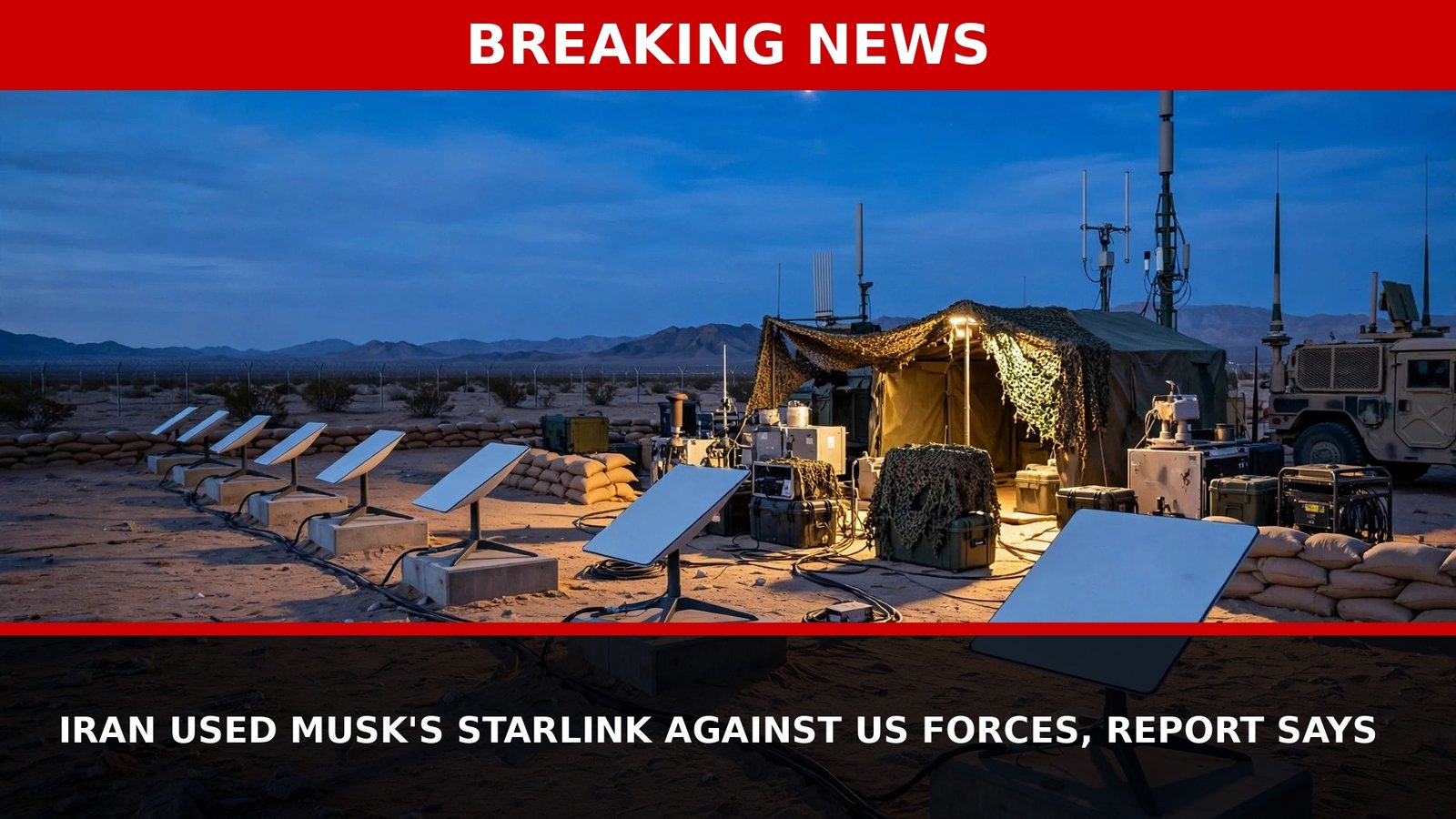
Iran used Elon Musk’s Starlink satellite internet service to support military operations against US forces in the early days of the war, The Washington Post reported on Saturday, November 28 — a revelation that stunned SpaceX and the Pentagon alike.
According to the report, which cited four people familiar with the operations, Iran turned to Starlink as an alternative mode of communication after the United States targeted its more traditional communication systems. The Iranian military used the service for command and control and to oversee attack drone operations as it launched ballistic missiles and drones at US bases across the Middle East.
How it was discovered
The use was detected in early March, after the United States and Israel began striking Iran and Tehran retaliated against American bases in the region. A classified war update delivered to Defense Secretary Pete Hegseth over the summer briefly described Iran’s use of the service, a person familiar with the report told the newspaper.
The Pentagon pushed back on the account. A Pentagon spokesperson said the department was “not aware of the existence” of a report on the subject, and spokeswoman Kingsley Wilson declined to comment on whether Iran had used Starlink. US Central Command’s report to the secretary’s office was not acknowledged by the department.
The attack that killed six Americans
On March 1, an Iranian drone strike killed six US soldiers at a military facility at Kuwait’s Port Shuaiba. The Post did not establish whether Starlink was used in that attack, and the Pentagon has not made the findings of its investigation public.
What is clear is that Iranian forces found a way to keep their drones connected even as their conventional communications were degraded — and that the tool they reached for was built by an American company whose satellites also serve US forces.
Musk’s anger — on two fronts
SpaceX chief executive Elon Musk became enraged upon learning of two unauthorized uses of Starlink that his team concluded were related to Iran’s efforts against US forces, the report said, citing two people familiar with internal company discussions.
But Musk’s fury was not aimed only at Tehran. He was also informed that the US military had flown one-way attack drones on Starshield — the militarized version of Starlink — while paying for a cheaper plan meant for ground operations. Both discoveries caused internal anger at SpaceX, and at least two executives were fired by the end of that week, according to the report.
SpaceX has since tightened its controls, requiring stricter identity verification for high-speed users and pausing indirect reselling while it demands proof of end-customer identities from its reseller network.
Why it matters
Starlink has become one of the most strategically important communications systems on the planet — used by Ukraine’s military, by US forces, and by civilians in war zones. The report shows the same network can be turned against the country that built it, through gray-market terminals and resellers, with no easy way to tell friend from foe in orbit.
For the Pentagon, the episode raises hard questions about dependence on a private company’s constellation for battlefield communications — and about who controls access when an adversary gets hold of the same terminals. For SpaceX, it is a reminder that a system designed to connect the unconnected does not check passports.
What happens next
Watch for whether the Pentagon releases findings from its investigation into the Port Shuaiba strike, for any further action by SpaceX to police its reseller network, and for whether Congress presses for answers about how Iranian forces obtained and operated Starlink terminals during the war.
Featured image: AI-generated news illustration for Apkwonders News, headline matches this article. Sources: reporting verified November 29, 2026, including Reuters, TechCrunch and The Jerusalem Post.