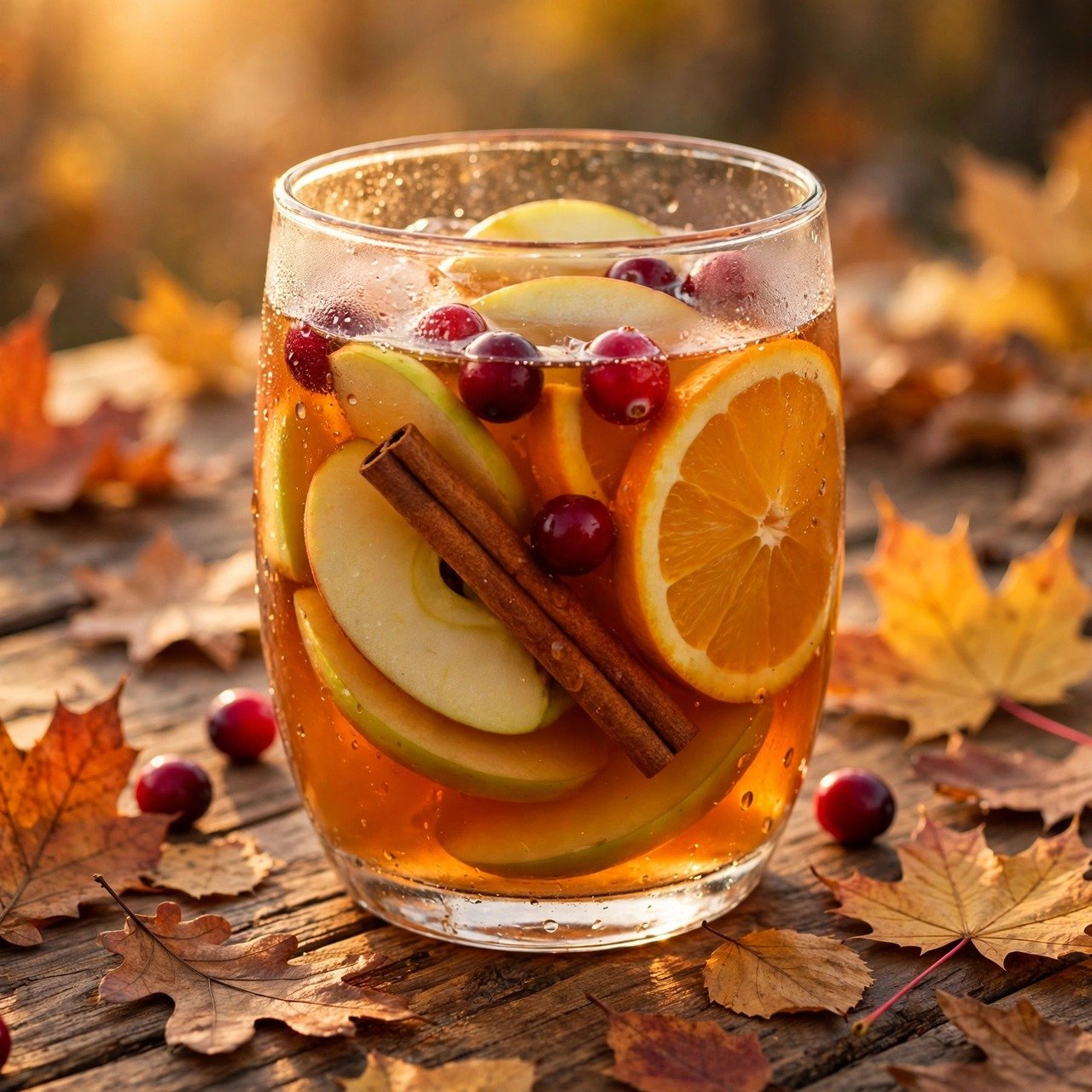
Apple cider sangria is the drink fall gatherings were made for: fruity, lightly spiced, and mixed in a pitcher hours before anyone arrives. The five recipes below share one foundation — good apple cider, fresh fruit, and a proper chill — but each takes a different turn.
Why You’ll Love This Apple Cider Sangria
The secret to sangria that tastes like a real drink instead of sweet juice is balance. Cider brings natural sweetness and body, while dry wine brings the acidity that keeps it from tasting cloying. Chilling the fruit in the cider before adding anything fizzy lets the apples and cranberries release flavor slowly, the way a marinade works. A splash of brandy adds warmth, and cinnamon sticks do the seasonal work ground spice never quite manages. One pitcher serves eight, and it tastes better after a few hours in the fridge.
Ingredients You’ll Need
The base recipe serves eight: 4 cups of fresh, unfiltered apple cider, 1 bottle (750 ml) of dry red wine, 1/2 cup of brandy, 1/4 cup of orange liqueur, 2 medium Honeycrisp or Gala apples, 1 navel orange, 1 cup of fresh cranberries, and 2 cinnamon sticks. The cranberry version adds 1 cup of cranberry juice and an extra 1/2 cup of cranberries. The spiced pear version adds 2 ripe Bartlett pears, 1/4 cup of spiced rum, and 2 whole star anise. The mocktail needs 3 cups of sparkling apple cider and 1 cup of ginger ale instead of wine and brandy. The sparkling version needs 1 bottle (750 ml) of chilled Prosecco and 1 cup of club soda.
How to Make Apple Cider Sangria
Every variation follows the same four moves: prep the fruit, mix the base, chill, then add the fizz last.
- Prep the fruit. Core the apples and slice them into thin half-moons, about 1/8 inch thick, and slice the orange into thin rounds, then halve the rounds. Thin slices release flavor fast; diced fruit sinks and turns mushy. Toss the apples with 1 tablespoon of lemon juice so they stay pale.
- Build the base in a large pitcher. Pour in the cider, wine, brandy, and orange liqueur, and stir gently for about 10 seconds. Do not add anything sparkling yet: carbonation escapes the moment it hits liquid, and a pitcher left sitting will taste flat.
- Add the fruit and spices — apple slices, orange halves, cranberries, and cinnamon sticks — and push the fruit down with a wooden spoon so it is submerged. Fruit on top dries out and browns; submerged fruit soaks up flavor.
- Cover and refrigerate for at least 4 hours, ideally overnight, up to 12 hours. It is ready when the cider has turned deep amber-red. Stir once, taste, and adjust with a splash more cider if it is too strong.
- Serve over ice in wine glasses or mason jars, with a few pieces of fruit in each glass. Add any sparkling ingredient — Prosecco, club soda, or ginger ale — right before pouring, so it stays fizzy.
1. Classic Apple Cider Sangria
This is the base recipe exactly as written above, with dry red wine, brandy, and orange liqueur. The ratio matters: four parts cider to roughly three parts wine keeps the drink fruit-forward without tasting like spiked juice. Serve with a cinnamon stick in each glass.
2. Cranberry Apple Cider Sangria
Follow the classic base, but swap 1 cup of the apple cider for 1 cup of 100 percent cranberry juice, not cranberry cocktail, and add an extra 1/2 cup of fresh cranberries. The tart juice balances the cider’s sweetness and turns the drink ruby red. Taste after chilling and add 1 tablespoon of maple syrup only if it needs it.
3. Spiced Pear Apple Cider Sangria
Follow the classic base, but use 2 ripe Bartlett pears in place of one apple, add 1/4 cup of spiced rum with the brandy, and drop in 2 whole star anise with the cinnamon sticks. Choose pears that give slightly near the stem; hard ones stay flavorless, overripe ones fall apart.
4. Non-Alcoholic Apple Cider Sangria (Mocktail)
Skip the wine, brandy, and liqueur. Mix 4 cups of apple cider with 1 cup of cranberry juice and 1/4 cup of fresh orange juice, add the same fruit and cinnamon sticks, and chill for 4 hours. Before serving, stir in 3 cups of chilled sparkling apple cider and 1 cup of ginger ale. Add the fizz last, or it goes flat.
5. Sparkling Apple Cider Sangria with Prosecco
Make the classic base with the cider, fruit, brandy, and orange liqueur, but leave out the red wine, and chill it for 4 hours. Just before serving, pour in 1 bottle of well-chilled Prosecco and 1 cup of club soda and stir once, gently. Stirring hard knocks the bubbles out, so one slow turn is enough.
Tips for the Best Apple Cider Sangria Every Time
Start with cider you would happily drink on its own, because no amount of wine fixes thin, watery cider. Use a dry wine, not a sweet one, since the cider already brings the sugar. Slice the fruit thin, keep it submerged, and chill at least 4 hours — unchilled sangria tastes like separate ingredients. Add anything sparkling at the very end. Taste before serving and fix with acid, not sugar: a squeeze of orange or lemon wakes up a flat batch better than more sweetener. Serve over fresh ice.
Easy Variations
Swap the red wine for white wine, such as Pinot Grigio, for a lighter sangria that lets the apple flavor lead. Use bourbon instead of brandy for a warmer, oakier note, or add 1/2 cup of pomegranate juice and a handful of seeds for color and tart crunch. Stir in 1 tablespoon of maple syrup if your cider is tart, or add a sliced lemon for extra brightness. For one glass, use 1/2 cup cider, 1/3 cup wine, a splash of brandy, and a few fruit slices; chill 30 minutes.
Storage and Reheating
The base — cider, wine, spirits, fruit, and spices, with nothing sparkling added — keeps in a covered pitcher in the refrigerator for up to 3 days, and it often tastes best on day two. After 3 days the fruit breaks down and the flavors turn muddy, so fish it out if you want to keep the liquid longer. Once you have added Prosecco or club soda, drink it within a few hours; it will not stay bubbly. For a warm version, gently heat fresh cider with cinnamon and cloves until steaming, about 180°F, then add the wine off the heat. Freeze leftovers in ice cube trays for your next pitcher.
Frequently Asked Questions
How far ahead can I make apple cider sangria? Mix the base up to 24 hours ahead and refrigerate it covered; that overnight chill is ideal. Add the fizz right before serving.
Why did my sangria go flat? The sparkling ingredient went in too early. Prosecco, club soda, and ginger ale lose their bubbles within an hour or two in a pitcher, so add them at serving time and stir gently just once.
Why is my sangria too sweet? Usually sweet wine or sweetened cranberry cocktail instead of 100 percent juice. Fix it with club soda and a squeeze of orange or lemon, and next time choose a dry wine and unsweetened cider.
How do I keep the apples from turning brown? Toss the slices in lemon juice as soon as you cut them and keep them submerged. Apples brown when they meet air, so fruit sitting on top is what discolors first.
Can I make apple cider sangria without alcohol? Yes — the mocktail version uses cider, cranberry juice, and orange juice with the same fruit and spices, topped with sparkling cider and ginger ale.
What wine is best for apple cider sangria? A dry, fruity red such as Pinot Noir, Tempranillo, or Garnacha, which adds structure without fighting the apple flavor. Avoid heavy reds like Cabernet Sauvignon, which turn bitter when chilled with fruit.
Nutrition Estimate
This is an estimate only — actual values vary with the wine, the cider brand, and how much fruit ends up in each glass. Per serving of the classic (about 8 ounces, eight servings): roughly 190 calories, 24 grams of carbohydrates, 1 gram of fiber, 20 grams of sugar, and 0 grams of protein.
The Bottom Line
Apple cider sangria rewards one good habit — chilling the fruit in the cider and wine long before you add anything fizzy — and everything else is a variation on that theme. Start with the classic, then branch into the cranberry, spiced pear, mocktail, or sparkling Prosecco version for your next gathering. Make the base the night before and add the bubbles at the table.