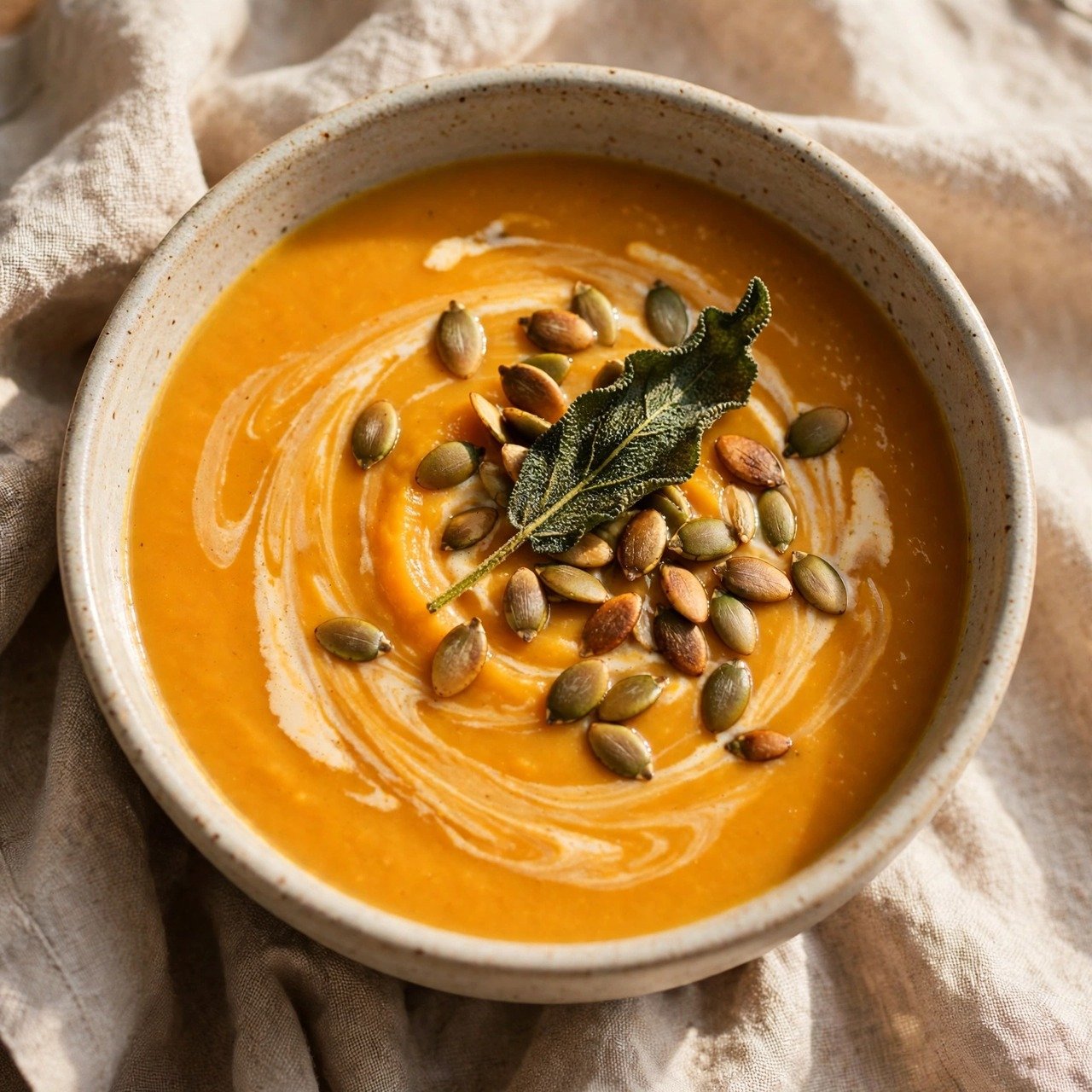
Butternut squash soup is the dish fall was made for: cheap, forgiving, and deeply comforting. The recipes below share one foundation — roast the squash first, then blend it smooth — but each takes a different turn.
Why You’ll Love This Butternut Squash Soup
Roasting is the single decision that separates a great butternut squash soup from a forgettable one. Raw squash simmered in broth tastes flat and watery because its sugars never caramelize. At 400°F, the cut surfaces brown, the sugars concentrate, and the squash develops a nutty sweetness that carries the whole bowl. These recipes also balance flavor the right way: a little fat to bloom the spices, a little acid at the end to wake everything up, and salt added in layers. And the base soup freezes beautifully, scales up for a crowd, and adapts to whatever you have — coconut milk instead of cream, a slow cooker instead of a pot, an apple for sweetness instead of sugar.
Ingredients You’ll Need
The base recipe serves six and uses one large butternut squash, about 3 pounds. Pick one that feels heavy for its size with matte, unblemished skin. You will also need 1 yellow onion, 3 garlic cloves, 2 tablespoons olive oil, 4 cups low-sodium vegetable or chicken broth, 1 teaspoon kosher salt, and 1/2 teaspoon black pepper. Each variation adds a short list. The apple and sage version needs 1 Honeycrisp or Granny Smith apple and 8 fresh sage leaves. The spicy version needs 1 tablespoon red curry paste or 1 teaspoon chili flakes and one 13.5-ounce can of full-fat coconut milk. The brown butter version needs 4 tablespoons unsalted butter and 12 fresh sage leaves. Keep a lemon on hand: a squeeze of juice at the end finishes every version.
How to Make Butternut Squash Soup
Every variation follows the same four moves: roast, sauté, simmer, blend.
- Heat the oven to 400°F. Peel the squash, scoop out the seeds, and cut the flesh into 1-inch cubes. Toss with 1 tablespoon of the olive oil and 1/2 teaspoon of the salt, spread on a sheet pan in a single layer, and roast 30 to 35 minutes, until the edges are deeply browned and a cube crushes easily under a fork.
- While the squash roasts, warm the remaining tablespoon of olive oil in a large pot over medium heat. Add the diced onion with a pinch of salt and cook 6 to 8 minutes, until soft and translucent, then add the garlic and cook 1 minute more, just until fragrant.
- Add the roasted squash and the broth to the pot. Bring to a gentle boil, then reduce to a simmer and cook 10 minutes so the flavors marry.
- Blend in batches, filling the blender only halfway each time and holding the lid down with a folded towel, or use an immersion blender right in the pot. Blend a full 2 minutes per batch; that long blend is what makes the soup velvety instead of grainy. Season with the remaining salt, pepper, and a squeeze of lemon juice. Taste and adjust before serving.
1. Classic Roasted Butternut Squash Soup
This is the base recipe exactly as written above, finished with a swirl of heavy cream if you like and a pinch of nutmeg. Serve it with crusty bread and a simple green salad, and it is dinner.
2. Butternut Squash Soup with Apple and Sage
Peel, core, and dice the apple and roast it on the same sheet pan as the squash — it needs the same 30 to 35 minutes at 400°F. Add it to the pot with the squash and broth. While the soup simmers, melt 1 tablespoon of butter in a small skillet and fry the sage leaves for 30 seconds, until crisp and dark green. The apple adds a bright sweetness that keeps the soup from tasting heavy.
3. Spicy Butternut Squash Soup with Chili and Coconut Milk
After the onion and garlic are soft, add 1 tablespoon of red curry paste or 1 teaspoon of chili flakes and stir for 1 minute before adding the squash and broth. This step matters: blooming spices in hot fat wakes up their flavor compounds, while spices tossed into liquid stay muted and raw-tasting. Simmer and blend as usual, then stir in the coconut milk off the heat, so it stays silky.
4. Slow Cooker Butternut Squash Soup
Skip the oven entirely. Add the peeled and cubed squash, the diced onion, the garlic, and the broth to a 6-quart slow cooker. Cook on low for 6 hours or on high for 3 hours, until the squash is completely soft and falling apart. Blend right in the pot with an immersion blender, season, and finish with the lemon juice.
5. Butternut Squash Soup with Brown Butter and Crispy Sage
Make the classic base recipe, then finish it like a restaurant would. Melt the butter in a light-colored skillet over medium heat and cook 3 to 4 minutes, swirling often, until it turns amber and smells nutty — the moment it darkens past amber, pull it off the heat, because brown butter turns to burnt butter in seconds. Fry the sage leaves in the hot butter for 30 seconds until crisp. Ladle the soup into bowls, drizzle with the brown butter, and top with the crispy sage and a pinch of flaky salt. Serve it as the Thanksgiving first course.
Tips for the Best Butternut Squash Soup Every Time
Cut the squash into even 1-inch pieces so they roast at the same rate; big chunks stay hard in the middle while small ones burn. Do not crowd the sheet pan, because crowded squash steams instead of roasting and never browns. Blend longer than you think you need to — two full minutes per batch is the difference between silky and grainy. A fine-mesh strainer fixes a rough soup in two minutes. Season in layers: salt the squash before roasting, salt the onions as they cook, and adjust at the end. A soup that tastes flat usually needs acid, not more salt — reach for the lemon juice first. If the soup is too thick, thin it with broth a quarter cup at a time; if it is too thin, simmer it uncovered for 10 minutes to reduce.
Easy Variations
Swap the vegetable broth for chicken broth for a deeper, savory base, or use apple cider in place of one cup of broth for a sweeter, autumnal note. Stir in a spoonful of miso paste for umami depth, or a roasted red pepper for color and smokiness. For a vegan version, use olive oil, coconut milk, and vegetable broth. Top with toasted pumpkin seeds, a swirl of yogurt, crumbled bacon, or a drizzle of maple syrup.
Storage and Reheating
Let the soup cool completely, then store it in airtight containers in the refrigerator for up to 5 days. It freezes beautifully for up to 3 months — portion it into freezer bags, lay them flat, and thaw overnight in the refrigerator. Reheat gently in a saucepan over medium-low heat, stirring often, for 8 to 10 minutes until steaming; add a splash of broth or water if it has thickened in the fridge. Do not boil it hard, especially the coconut milk version, because high heat can make dairy and coconut milk separate.
Frequently Asked Questions
Do I have to peel the butternut squash? Yes, the skin is tough and will not break down in the blender, so it leaves the soup gritty. A sharp vegetable peeler makes quick work of it.
Why is my soup grainy? Almost always, it was under-blended or the squash was under-roasted. Blend a full two minutes per batch, and make sure the squash is truly soft before it goes in the pot.
Can I freeze butternut squash soup? Yes, it freezes for up to 3 months. Leave out the cream and coconut milk until reheating day for the smoothest texture.
How do I fix a bland soup? Add acid first — a squeeze of lemon juice or a teaspoon of apple cider vinegar — then salt in small pinches, tasting as you go.
Nutrition Estimate
This is an estimate only — actual values vary with the size of your squash, the brand of broth, and the garnishes you choose. Per serving of the classic version (about 1 1/2 cups, six servings): roughly 180 calories, 7 grams of fat, 28 grams of carbohydrates, 5 grams of fiber, 8 grams of sugar, and 4 grams of protein.
The Bottom Line
Butternut squash soup rewards one good habit — roasting the squash before it ever meets the pot — and everything else is a variation on that theme. Start with the classic, learn how the base should taste, then branch into the apple and sage, the spicy coconut, the hands-off slow cooker, or the brown butter version for Thanksgiving. Make a double batch and freeze half.