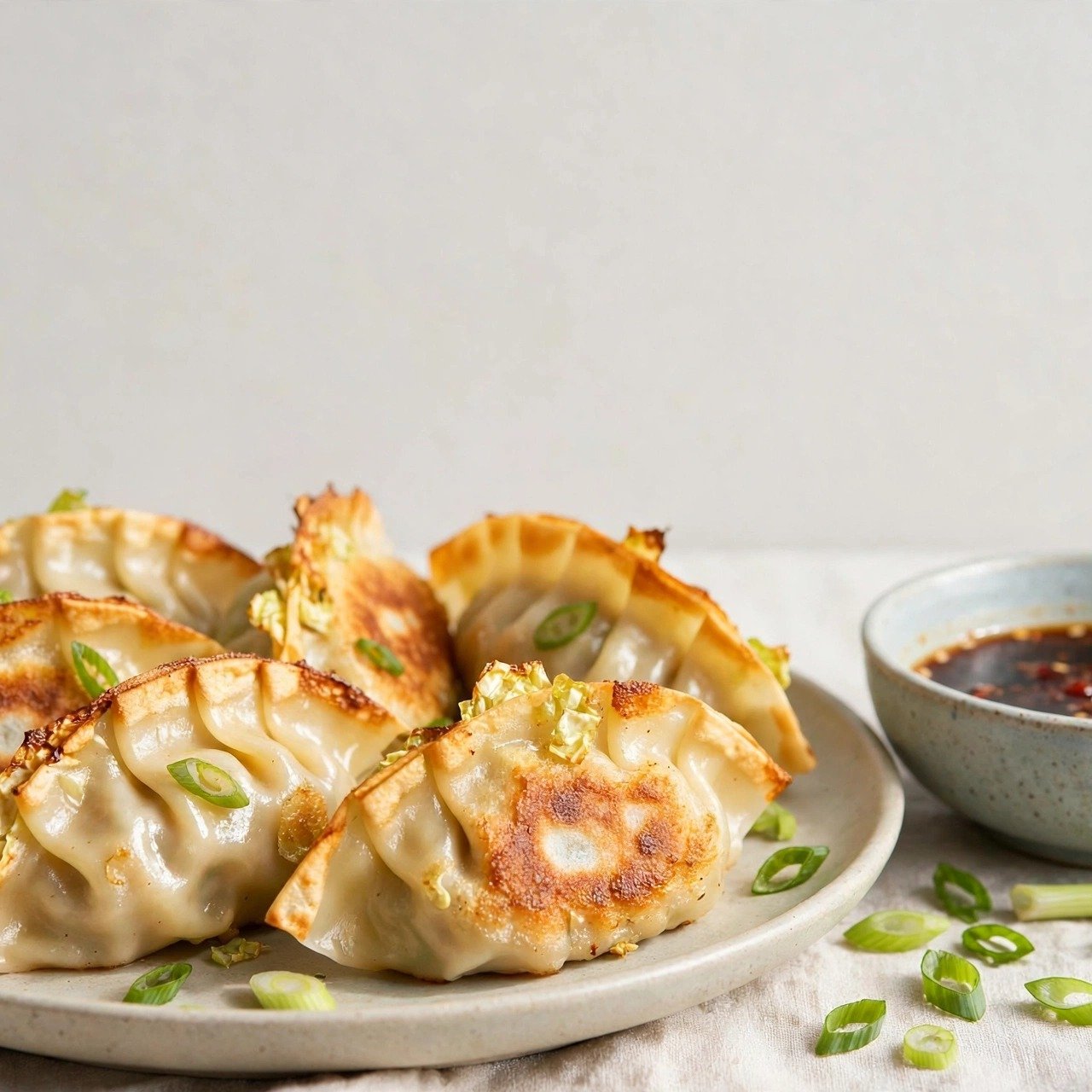
Cabbage dumplings are the kind of food that disappears fast: a crisp golden bottom, a tender steamed top, and a juicy, savory filling with just a little sweetness. This collection builds five cabbage dumpling recipes around one reliable technique, so whether you want the classic pork version, a vegetarian option, or something with heat, dinner comes together without guesswork.
Why You’ll Love These Cabbage Dumplings
The texture is unbeatable. The fry-steam-fry method gives you a crunchy base and a soft, slightly chewy top in the same bite, using nothing more than a lidded skillet. The recipe is forgiving: the filling comes together in one bowl, the wrappers are store-bought, and a slightly imperfect pleat still seals and cooks beautifully.
One batch makes about 24 dumplings, enough for four as a main dish or six as an appetizer, and they freeze well before cooking.
Ingredients You’ll Need
These quantities make about 24 dumplings and serve 4.
For the filling
- 1 pound ground pork (80/20 for a juicy filling)
- 3 cups finely shredded green cabbage (about 1/2 small head)
- 1 teaspoon kosher salt, divided
- 3 green onions, finely sliced
- 2 tablespoons grated fresh ginger
- 2 cloves garlic, minced
- 1 tablespoon soy sauce
- 1 tablespoon toasted sesame oil
- 1 teaspoon rice vinegar
- 1/2 teaspoon sugar
- 1/4 teaspoon white pepper
For assembling and cooking
- 24 round dumpling wrappers (about 3 1/2 inches across)
- 2 tablespoons neutral oil, divided
- 1/2 cup water, divided
For the dipping sauce
- 3 tablespoons soy sauce
- 1 tablespoon rice vinegar
- 1 teaspoon toasted sesame oil
- 1 teaspoon honey
- 1/2 teaspoon chili flakes, optional
Vegetarian swap: replace the pork with 14 ounces of extra-firm tofu, pressed for 20 minutes and crumbled, plus 1 cup of chopped shiitake mushrooms sautéed in 1 tablespoon of oil for 5 minutes until browned. The mushrooms supply the savory depth pork normally provides, and pressed tofu keeps the filling from turning watery.
How to Make Cabbage Dumplings
- Salt and drain the cabbage. Toss the cabbage with 1/2 teaspoon of the salt and rest 15 minutes. Squeeze firmly in handfuls over the sink or in a clean towel until no more liquid comes out. This matters most: unsalted cabbage releases water in the pan, and wet filling makes wrappers soggy and prone to tearing.
- Mix the filling. Combine the drained cabbage, pork, remaining 1/2 teaspoon salt, green onions, ginger, garlic, soy sauce, sesame oil, rice vinegar, sugar, and white pepper. Stir in one direction for about 2 minutes, until sticky and holding together when pressed. Stirring one way develops a light bind in the meat, keeping the filling juicy rather than crumbly.
- Fill the wrappers. Place a wrapper in your palm, spoon about 1 tablespoon of filling into the center, and moisten the edge with a wet fingertip. Fold in half, pinch the center closed, then make 3 small pleats on each side, pressing firmly to seal. Set each dumpling flat side down on a parchment-lined tray. Do not overfill — an overfull dumpling bursts in the pan.
- Brown the bottoms. Heat 1 tablespoon of oil in a large nonstick or cast-iron skillet over medium-high heat until it shimmers, about 1 minute. Arrange 12 dumplings flat side down with space between them. Cook undisturbed for 2 to 3 minutes, until deep golden brown. Do not move them; the crust forms only when a dumpling sits still against the hot pan.
- Steam them through. Carefully pour 1/4 cup of water into the pan — it will splatter, so have the lid ready — and cover immediately. Reduce heat to medium and steam 5 minutes. The pork filling should reach 160°F, and the wrappers should look translucent and slightly puffed.
- Crisp them again. Remove the lid and cook 1 to 2 more minutes, until the water evaporates and the bottoms re-crisp. The sizzle will change from wet to dry and crackly — that sound is your cue. Transfer to a plate, repeat with the second batch, and serve hot with the dipping sauce.
Tips for the Best Cabbage Dumplings Every Time
Squeeze the cabbage dry, every time. Cabbage is about 92 percent water, and that water has to go somewhere. Salting draws it out before cooking so it does not flood the filling. Skipping this step is the most common reason dumplings turn out soggy or split open.
Keep wrappers covered and do not crowd the pan. Wrappers dry out in minutes, and a dry edge will not seal, so keep the stack under a damp towel and work with a few at a time. Dumplings that touch steam each other instead of browning and can fuse, so cook 12 at a time in a 12-inch skillet.
Use a lid that seals well, and let the crust reset. The steam stage cooks the filling and softens the wrapper tops; a loose lid lets steam escape, leaving tough tops and undercooked centers. The final uncovered minute is not optional — it drives off the last water and re-crisps bottoms softened by steaming.
Easy Variations
- Classic Pork and Cabbage Potstickers. The flagship recipe above: pork, salted cabbage, ginger, and green onion, pan-fried until golden, served with soy-vinegar dipping sauce. Master this first, since every variation uses the same technique.
- Vegetarian Tofu and Shiitake Dumplings. Use the tofu and mushroom swap above, plus 1 tablespoon of white miso paste for savory depth. These brown like the pork version and hold together well because pressed tofu binds with the cabbage.
- Spicy Chili-Crisp Cabbage Dumplings. Add 2 tablespoons of chili crisp and 1 teaspoon of toasted, ground Sichuan peppercorn to the classic pork filling, and spike the dipping sauce with an extra spoonful of chili crisp.
- Chicken and Napa Cabbage Gyoza. Swap the pork for 1 pound of ground chicken and the green cabbage for 3 cups of shredded napa cabbage, which is more tender and slightly sweeter. Add 1 tablespoon of sake or dry white wine, and steam 6 minutes instead of 5, since chicken must reach 165°F.
- Cheesy Kimchi Cabbage Dumplings. Replace half the fresh cabbage with 1 1/2 cups of well-drained, chopped kimchi and add 1/2 cup of shredded low-moisture mozzarella for a tangy, gooey center, best with a simple soy and vinegar dip.
Storage and Reheating
Uncooked dumplings freeze beautifully. Arrange in a single layer on a parchment-lined sheet, freeze 2 hours until solid, then transfer to a freezer bag. They keep up to 3 months. Cook from frozen: add 1 extra minute to browning and 2 extra minutes to steaming, using the same 1/4 cup of water per batch.
Cooked dumplings keep in an airtight container in the refrigerator up to 3 days, though the bottoms soften. Reheat in a lightly oiled skillet over medium heat for 3 to 4 minutes, flat side down, until the bottoms crisp again. The microwave makes them rubbery and is best avoided.
Frequently Asked Questions
Can I use store-bought wrappers?
Yes — they work perfectly and are what most home cooks use. Find them in the refrigerated section near the tofu. Homemade wrappers taste wonderful but add an hour and are not necessary for a great result.
Why did my dumplings stick to the pan?
Usually too little oil, a pan that was not hot enough, or moving the dumplings before the crust formed. Make sure the oil shimmers before adding them, then leave them alone for the full 2 to 3 minutes of browning.
Can I steam cabbage dumplings instead of pan-frying them?
Yes. Line a steamer with parchment or cabbage leaves, space dumplings 1 inch apart, and steam over boiling water for 8 to 10 minutes, until wrappers are translucent and the filling reaches 160°F for pork or 165°F for chicken.
How do I keep the filling from making wrappers soggy?
Salt and squeeze the cabbage thoroughly, and do not let filled dumplings sit more than 30 minutes before cooking. If you must hold them longer, freeze them on a tray first.
What should I serve with cabbage dumplings?
They pair well with cucumber salad, steamed rice, or miso soup.
Nutrition Estimate
Estimate only: per serving of 6 dumplings (1/4 of the recipe, with dipping sauce), approximately 380 calories, 18 grams of protein, 38 grams of carbohydrates, 16 grams of fat, and 780 milligrams of sodium. This is an estimate, not a precise measurement — actual values vary with the wrappers and the pork’s fat content.
The Bottom Line
Cabbage dumplings prove that a humble, affordable vegetable can anchor a dinner worth looking forward to. Salt the cabbage, seal the wrappers well, and give the bottoms time to turn truly golden, and you will have a batch that rivals any restaurant version. Start with the classic pork potstickers, work through the five variations to find your favorite, and keep a bag of uncooked dumplings in the freezer.