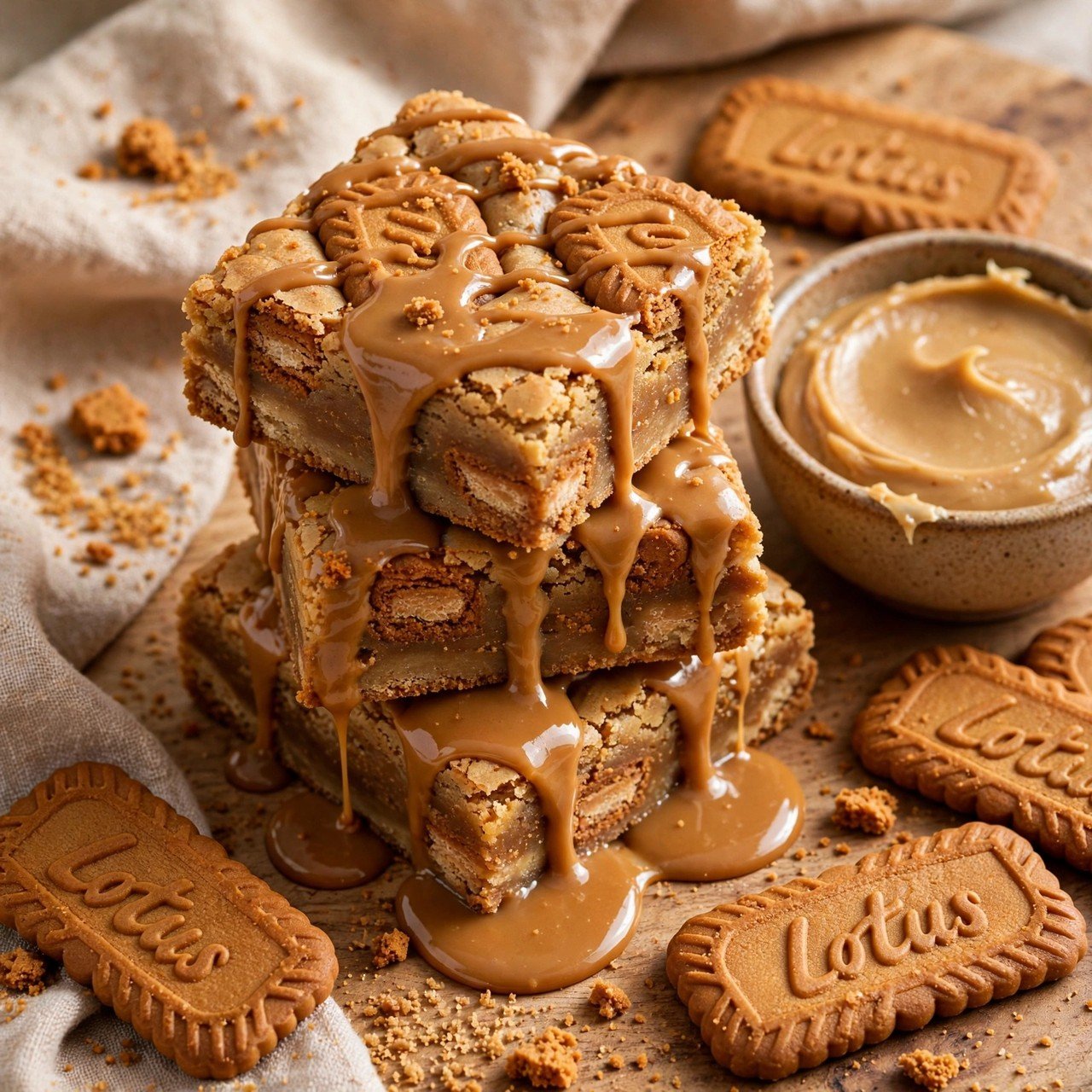
Cookie butter has gone from pantry curiosity to full dessert phenomenon. Biscoff speculoos spread — caramelized, cinnamon-laced, ready to use straight from the jar — showed up in nearly a dozen new foods at the 2026 North Carolina State Fair, where one cookie butter creation won Best New Sweet Food. It works because it brings cookie flavor and spreadable texture to the same bite. These five recipes were developed around how cookie butter actually behaves — it is not peanut butter, and it melts, sets, and bakes by its own rules — so every one of them works the first time.
Why You’ll Love These Cookie Butter Dessert Recipes
Every recipe here starts with a jar and ends with dessert. The cheesecake cups take ten minutes of hands-on work, the blondies bake in one pan, the tiramisu layers up with no cooking, the snickerdoodles hide a molten center with one freezing trick, and the mug cakes go from craving to spoon-ready in under two minutes. Each recipe carries the troubleshooting notes from my test batches — the greasy-blondie fix, the runny-cheesecake fix, the seized-spread fix — so you skip my mistakes.
1. No-Bake Cookie Butter Cheesecake Cups
Full-cheesecake flavor with no water bath: a crushed-cookie base, fluffy cookie butter filling, and a warm drizzle, set in the refrigerator.
- 20 Biscoff cookies, crushed (about 1 1/2 cups crumbs)
- 5 tablespoons unsalted butter, melted
- 12 ounces cream cheese, softened 1 hour at room temperature
- 3/4 cup creamy cookie butter, plus 3 tablespoons for drizzling
- 1 cup powdered sugar
- 1 teaspoon vanilla extract
- 1/2 teaspoon fine sea salt
- 1 1/4 cups heavy cream, cold
- 6 whole Biscoff cookies, for garnish
- Stir the crumbs and melted butter until the mixture feels like damp sand. Press about 2 tablespoons into each of 6 small dessert cups to form a base.
- Beat the cream cheese on medium speed until completely smooth, about 1 minute. Add the 3/4 cup cookie butter, powdered sugar, vanilla, and salt; beat until silky.
- Whip the cold heavy cream to firm peaks. Fold into the cream cheese mixture in three additions, keeping the air in.
- Pipe or spoon the filling over the crusts and smooth the tops. Cover and refrigerate at least 2 hours, until a gentle nudge shows no wobble in the center.
- Warm the remaining cookie butter in 10-second microwave bursts until pourable, about 20 seconds. Drizzle over the cups and garnish with a whole cookie.
Chilling is what turns this from mousse to cheesecake, since the filling is stabilized by cold fat, not eggs or gelatin. Runny centers mean under-chilling or cream whipped past firm peaks into butter. Warm the drizzle gently: cold cookie butter is too thick to pour and will tear the filling, while a few seconds of heat makes it pour in ribbons.
2. Cookie Butter Blondies
Brownies’ golden cousin, marbled with cookie butter so every square has pockets of concentrated caramel-cinnamon flavor.
- 1 1/4 cups all-purpose flour
- 1/2 teaspoon baking powder
- 1/2 teaspoon fine sea salt
- 1/2 teaspoon ground cinnamon
- 3/4 cup unsalted butter, melted and cooled 5 minutes
- 1 cup packed dark brown sugar
- 1/4 cup granulated sugar
- 2 large eggs, at room temperature
- 2 teaspoons vanilla extract
- 2/3 cup creamy cookie butter, divided
- 8 Biscoff cookies, chopped (about 3/4 cup)
- Heat the oven to 350 degrees Fahrenheit. Line an 8-by-8-inch metal pan with parchment, leaving overhang on two sides. Whisk the flour, baking powder, salt, and cinnamon in a bowl.
- Whisk the melted butter with both sugars until glossy, about 30 seconds. Whisk in the eggs one at a time, then the vanilla.
- Whisk in 1/3 cup of the cookie butter until incorporated. Fold in the dry ingredients just until no flour streaks remain, then fold in the chopped cookies.
- Spread the batter in the pan. Drop the remaining cookie butter in dollops over the surface and drag a butter knife through in S-curves to marble it.
- Bake 24 to 27 minutes, until the edges are set and golden. Test near the edge — not the center — with a toothpick; it should come out with a few moist crumbs, not wet batter. The center will look slightly underdone, and that is correct.
- Cool completely in the pan on a wire rack, at least 1 hour, before lifting out and cutting into 16 squares. Carryover heat finishes the center.
The center firms up as it cools, so a clean toothpick in the middle means an overbaked, dry blondie. Greasy blondies come from overmixing after the flour goes in — overdeveloped gluten squeezes the fat out. Fold gently and stop at the first sign of no streaks. Dark brown sugar keeps the crumb chewy for days and deepens the caramel notes.
3. Biscoff Tiramisu
Classic tiramisu, reimagined: espresso-soaked ladyfingers become spiced-milk-soaked ones, and the cocoa layer becomes crushed Biscoff. Same cloudlike texture, no cooking.
- 1 1/2 cups whole milk
- 2 tablespoons brown sugar
- 1/2 teaspoon ground cinnamon
- 1/4 teaspoon ground nutmeg
- 8 ounces mascarpone cheese, at room temperature
- 3/4 cup creamy cookie butter
- 1 1/4 cups heavy cream, cold
- 1/3 cup powdered sugar
- 1 teaspoon vanilla extract
- 24 crisp ladyfinger cookies (savoiardi)
- 6 Biscoff cookies, crushed, for topping
- Warm the milk until steaming but not simmering. Whisk in the brown sugar, cinnamon, and nutmeg; pour into a shallow dish and cool 10 minutes.
- Beat the mascarpone and cookie butter until completely smooth, about 45 seconds, scraping the bowl so no lumps hide at the bottom.
- Whip the cold heavy cream, powdered sugar, and vanilla to soft peaks. Fold into the mascarpone mixture in two additions.
- Dip each ladyfinger in the spiced milk for 2 seconds per side — no longer. Arrange 12 in a single layer in an 8-by-8-inch dish.
- Spread half the cream over the ladyfingers. Repeat with the remaining dipped ladyfingers and cream, smoothing the top.
- Cover and refrigerate at least 4 hours, or overnight for the cleanest slices. Shower with crushed Biscoff just before serving.
The two-second dip is the line between tiramisu and mush: crisp savoiardi drink liquid fast, and a longer soak turns the layer to paste. Room-temperature mascarpone is non-negotiable — cold mascarpone curdles into lumps that beating cannot fix. The overnight rest is where the layers trade moisture and flavor until the dish tastes like one unified dessert.
4. Cookie Butter Stuffed Snickerdoodle Cookies
A frozen core of cookie butter in the center turns classic snickerdoodles molten. Freezing the filling first keeps it from melting into the dough and disappearing.
- 1 cup creamy cookie butter, for the filling
- 3/4 cup unsalted butter, softened
- 3/4 cup granulated sugar, plus 1/3 cup for rolling
- 1/2 cup packed light brown sugar
- 2 large eggs, at room temperature
- 2 teaspoons vanilla extract
- 2 1/4 cups all-purpose flour
- 2 teaspoons cream of tartar
- 1 teaspoon baking soda
- 1/2 teaspoon fine sea salt
- 2 teaspoons ground cinnamon, plus 1 teaspoon mixed into the rolling sugar
- Scoop 16 level teaspoons of cookie butter onto a parchment-lined plate and freeze at least 45 minutes, until firm enough to handle.
- Heat the oven to 375 degrees Fahrenheit and line two baking sheets with parchment. Stir the rolling sugar with 1 teaspoon cinnamon in a shallow bowl.
- Beat the softened butter with both sugars until light and fluffy, about 2 minutes. Beat in the eggs one at a time, then the vanilla.
- Whisk the flour, cream of tartar, baking soda, salt, and 2 teaspoons cinnamon; fold into the wet ingredients just until combined.
- Flatten 2-tablespoon portions of dough in your palm, press a frozen cookie butter scoop into the center, and fold the dough up around it, pinching the seams shut. Roll into smooth balls.
- Roll in cinnamon sugar and space 2 inches apart. Bake 9 to 11 minutes, until the edges are set and lightly golden but the centers still look slightly soft.
- Cool on the baking sheet 5 minutes, then move to a wire rack. Serve warm, when the centers are at their gooiest.
The frozen filling stays solid while the dough sets, then melts in the oven’s final minutes into the molten pocket. If a cookie leaks, the seal was not fully pinched — re-roll firmly between your palms before coating. Cream of tartar is what makes a snickerdoodle: its acidity reacts with the baking soda for a tender, chewy rise and adds the faint tang that sets these apart from sugar cookies. Pull the cookies while the centers still look soft; they finish on the hot pan.
5. Cookie Butter Lava Mug Cakes
A spoonful of cookie butter dropped into the center of a mug cake turns it into a lava cake. The fastest recipe here, and dangerously easy to make a habit.
- 4 tablespoons all-purpose flour
- 2 tablespoons brown sugar
- 1/4 teaspoon baking powder
- 1/4 teaspoon ground cinnamon
- Pinch of fine sea salt
- 3 tablespoons whole milk
- 2 tablespoons neutral oil or melted butter
- 1/2 teaspoon vanilla extract
- 1 1/2 tablespoons creamy cookie butter, cold from the jar
- Crushed Biscoff crumbs, for topping (optional)
- In a 12-ounce microwave-safe mug, whisk the flour, brown sugar, baking powder, cinnamon, and salt until no lumps remain.
- Add the milk, oil, and vanilla; whisk until just smooth. A few tiny lumps are fine.
- Drop the cold cookie butter into the center of the batter, pushing it halfway down. Do not stir.
- Microwave on high 70 to 90 seconds. The cake is done when the top looks set and dry but feels springy, not firm, when lightly touched — the center stays molten.
- Rest 1 minute, dust with crumbs if you like, and eat immediately with a spoon.
Microwaves vary, so start at 70 seconds and add time in 10-second bursts — a rubbery mug cake is always a minute past overdone. The cold cookie butter is deliberate: the cake cooks so fast that room-temperature spread would melt into the batter before the crumb sets, while cold spread holds its pocket shape long enough to create the lava center. Rest the full minute; the cake is still cooking from residual heat, and diving in early gives a gummy texture.
Tips for the Best Cookie Butter Desserts Every Time
Use creamy, not crunchy: the cookie pieces in crunchy spread turn gritty in fillings and seize oddly when melted. Warm cookie butter for drizzling in 10-second microwave bursts — it goes from stiff to silky in under 30 seconds, and overheating breaks the emulsion into an oily layer that will not come back together. Stir any oil film on the jar back in before measuring; it is part of the fat balance these recipes assume. Cookie butter is already sweet and spiced, so these recipes use less added sugar than peanut butter versions — trim another tablespoon or two if your brand is extra-sweet.
Easy Variations
Swap the cheesecake base for crushed graham crackers or gingersnaps, or fold mini chocolate chips into the filling. Top the blondies with white chocolate chips or flaky sea salt before baking. Stir a tablespoon of coffee liqueur into the tiramisu milk for an adults-only version, or use hot chocolate instead of spiced milk for a cocoa-forward take. Fill the snickerdoodles with a frozen teaspoon of Nutella or caramel instead. The mug cake doubles into a two-mug dessert — keep each mug to a single serving, since overfilled mug cakes cook unevenly.
Storage and Reheating
The cheesecake cups keep up to 4 days refrigerated, covered tightly; the tiramisu improves overnight and holds 3 days. Add crunchy toppings the day you serve so they stay crisp. Blondies stay chewy 3 days at room temperature in an airtight container, or freeze up to 3 months with parchment between squares; thaw an hour at room temperature. Stuffed snickerdoodles keep 4 days at room temperature, and 10 seconds in the microwave brings back the molten center. Mug cakes are eat-immediately desserts — they toughen within 20 minutes.
Frequently Asked Questions
Can I use homemade cookie butter? You can, but homemade versions vary in oil content and sweetness, so bakes may come out slightly drier or softer. Try it in the mug cake or snickerdoodles first — the most forgiving recipes — before the cheesecake cups.
Why did my cookie butter seize when I tried to melt it? It was overheated. Cookie butter is an emulsion of cookie solids, oils, and sugar; high heat breaks it into grainy paste and separated oil. Warm it in 10-second bursts, stirring between each, and stop the moment it pours.
Are these recipes nut-free? Biscoff-style cookie butter is made from wheat cookies, not nuts, and is produced in nut-free facilities — but always check your jar’s label, since formulations differ by brand. None of the five recipes include tree nuts or peanuts as written.
Can I make the cheesecake cups or tiramisu ahead? Yes — both are better made ahead. The cups need at least 2 hours of chilling and can rest overnight; the tiramisu needs at least 4 hours and peaks at 12 to 24. Add toppings the day you serve.
My blondies came out cakey instead of fudgy. What happened? Overbaking or overmixing. Blondies finish cooking in the hot pan after they leave the oven, so pull them when the center still looks slightly underdone. Vigorous mixing after the flour goes in develops gluten, which makes the crumb rise like cake instead of staying dense and fudgy.
Nutrition Estimate
Estimates only, since values depend on your brand of cookie butter: each cheesecake cup about 480 calories; one blondie square about 310; a tiramisu serving roughly 420; each stuffed snickerdoodle near 290; a mug cake around 410. This information is an estimate for general guidance only and is not a substitute for professional nutritional advice.
The Bottom Line
Cookie butter earned its fair-food trophy by making desserts taste like far more effort than they took. These five recipes give you the full toolkit: a no-bake option, a potluck pan dessert, an elegant make-ahead, a stuffed cookie with wow factor, and a two-minute mug cake for late-night cravings. Learn how cookie butter behaves once — warm it gently, chill what needs chilling, freeze the fillings, pull bakes a minute early — and you can riff on these all season.