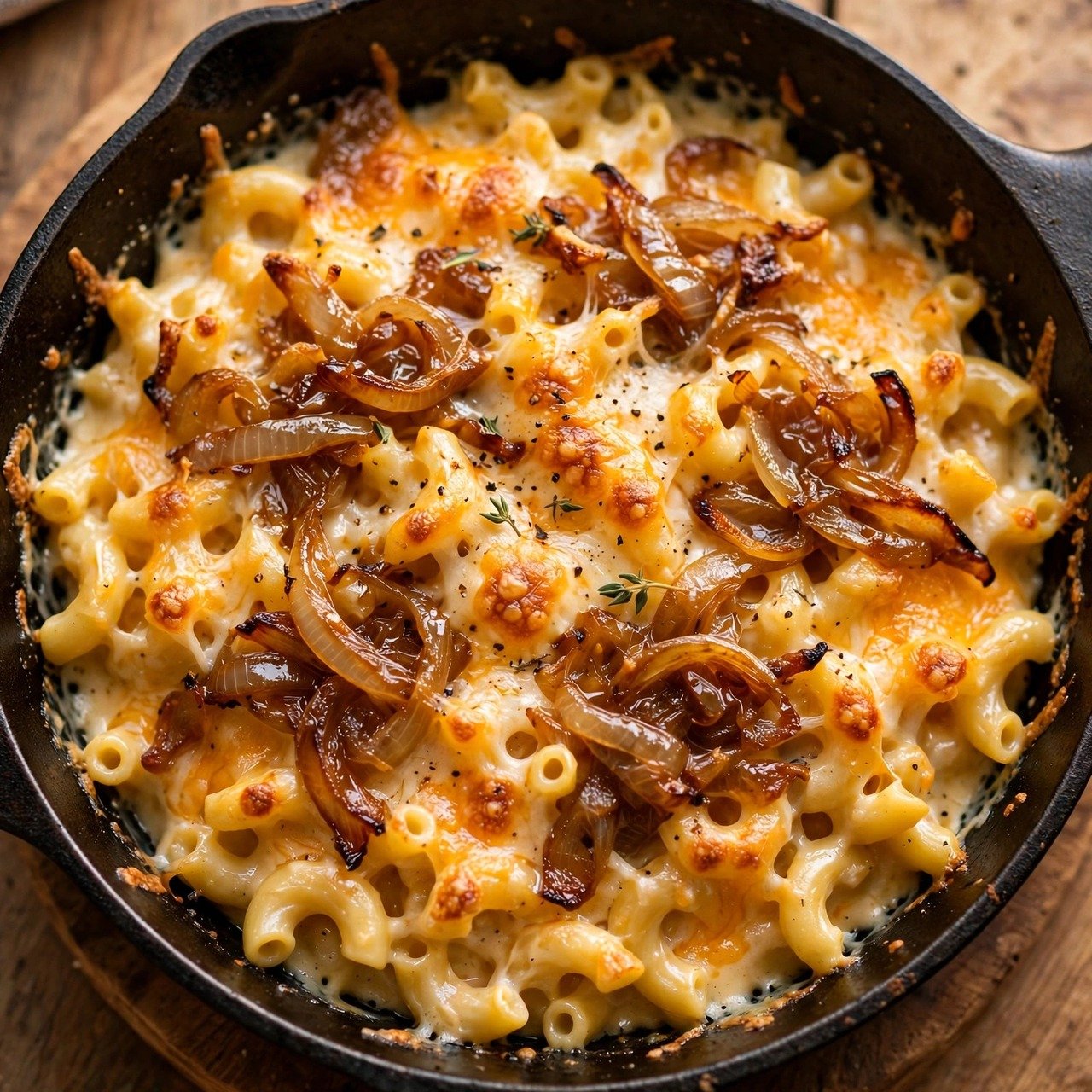
5 French Onion Mac and Cheese Recipes
French onion soup and mac and cheese rarely share the same pot, but they fix each other’s weaknesses. The soup brings jammy sweetness from slowly caramelized onions and a savory, beefy backbone. Mac and cheese brings creamy richness and pasta that catches sauce in every curve. Together they make silky cheese sauce threaded with sweet onions, topped with buttery crumbs and a bubbling Gruyère crust.
This article gives you five ways to make it: the classic baked hero recipe plus slow cooker, skillet, lighter, and extra-Gruyère versions built on the same base. What sets this version apart is patience at two moments: onions cooked until truly mahogany colored, not just golden, and cheese melted off the heat so the sauce stays smooth.
Why You’ll Love This French Onion Mac and Cheese
The flavor is layered in a way plain mac and cheese never achieves. The onions add sweetness that balances the salty cheese, while beef broth and Worcestershire sauce give savory depth and thyme keeps it from feeling heavy. The texture is just as good: sauce that clings instead of pooling, and a topping that stays crisp. It reheats well, feeds a crowd, and pairs with a simple green salad.
Ingredients You’ll Need
- 1 pound elbow macaroni
- 3 tablespoons unsalted butter, plus 2 tablespoons for the topping
- 3 large yellow onions (about 2 pounds), thinly sliced
- 1 teaspoon granulated sugar
- 1 teaspoon kosher salt, divided
- 1/2 teaspoon black pepper
- 3 tablespoons all-purpose flour
- 1 cup low-sodium beef broth
- 2 cups whole milk, warmed
- 1 cup heavy cream
- 1 tablespoon Worcestershire sauce
- 2 teaspoons fresh thyme leaves
- 8 ounces Gruyère cheese, freshly grated
- 8 ounces sharp white cheddar cheese, freshly grated
- 1 cup panko breadcrumbs
- 1/4 cup grated Parmesan cheese
How to Make French Onion Mac and Cheese
- Caramelize the onions. Melt 3 tablespoons butter in a large, heavy pot over medium heat. Add the onions, sugar, and 1/2 teaspoon salt. Cook, stirring every few minutes, for 35 to 40 minutes, until deep mahogany brown and jammy. If the pan looks dry, add a tablespoon of water. Do not raise the heat to rush this: high heat burns the sugars and leaves bitter onions.
- Cook the pasta. Boil the macaroni in well-salted water for 1 minute less than the package directions for al dente, usually about 6 minutes, then drain. It softens again in the hot sauce and the oven, so fully cooked pasta turns mushy.
- Build the sauce. Sprinkle flour over the onions and stir for 1 minute until the raw flour smell disappears. Slowly pour in the beef broth, scraping up the browned bits, then whisk in the warm milk and cream; cold milk cools the roux and encourages lumps. Simmer over medium-low heat for 4 to 5 minutes, stirring often, until the sauce coats the back of a spoon.
- Add cheese off the heat. Remove the pot from the heat. Stir in the Worcestershire sauce, thyme, remaining salt, and pepper. Add the Gruyère and cheddar in three handfuls, stirring until each melts before adding the next. Off-heat melting stops the cheese proteins from tightening and turning grainy, the most common reason cheese sauce breaks.
- Top and bake. Fold the pasta into the sauce, transfer to a greased 9 by 13 inch baking dish, and sprinkle with panko tossed with melted butter and Parmesan. Bake at 375°F for 20 to 25 minutes, until bubbling at the edges and golden on top. For a soup-crock finish, broil on high for 2 to 3 minutes, watching constantly, until deeply browned in spots. Rest for 10 minutes before serving so the sauce sets and clings to the pasta.
Tips for the Best French Onion Mac and Cheese Every Time
Grate your own cheese. Pre-shredded cheese is coated with anti-caking starch that resists smooth melting and can make sauce feel gritty. Freshly grated Gruyère melts far more silkily.
Fix a grainy sauce fast. If the sauce looks curdled, take it off the heat at once and whisk in 2 tablespoons of warm cream, a little at a time. Never try to rescue it by boiling harder; heat caused the problem. If it is too thick, whisk in warm milk. If it is too thin, simmer 2 to 3 minutes longer before adding cheese.
Give the onions room. A wide, heavy pot lets onions brown instead of steaming. A crowded, thin pan keeps them pale and wet no matter how long you cook them. If your only pot is small, caramelize in two batches.
Easy Variations
1. Slow Cooker French Onion Mac and Cheese
Caramelize the onions on the stovetop first; a slow cooker cannot reach the temperature needed for true caramelization. Transfer them to the slow cooker with the flour, broth, milk, cream, Worcestershire, and thyme, and cook on low for 2 hours, stirring once halfway through. Stir in the cheeses, fold in pasta cooked 1 minute short of al dente, top with buttered panko, and cook uncovered on low for 20 minutes.
2. One-Skillet Weeknight French Onion Mac
Use a 12-inch oven-safe skillet and halve the recipe for two to three servings. Caramelize one large onion for 20 to 25 minutes, build the sauce in the same skillet, and stir in 8 ounces of pasta cooked just short of al dente. Top with panko and cheese and broil for 2 to 3 minutes. The meal takes about 45 minutes with only one pan to wash.
3. Lighter French Onion Mac and Cheese
Replace the heavy cream with an extra cup of whole milk, reduce the cheddar to 6 ounces, and keep the full Gruyère, which carries most of the French onion character. Use 2 tablespoons of butter for the onions and add an extra onion. Simmer the sauce a full 5 minutes before adding cheese, and use half the panko topping.
4. French Onion Soup Style Bake with Extra Gruyère
Increase the Gruyère to 12 ounces and reduce the cheddar to 4 ounces so the nutty Gruyère dominates. Add 1 tablespoon of dry sherry with the beef broth, plus an extra layer of Gruyère over the panko. Bake at 375°F for 25 minutes, then broil for 3 minutes until the cheese blisters and browns deeply.
Storage and Reheating
Refrigerate leftovers in an airtight container for up to 4 days. The sauce firms up when cold and loosens when heated gently. Reheat in a covered skillet over medium-low heat for 5 to 7 minutes with a splash of milk, stirring until creamy, or in the microwave in 60-second intervals at 50 percent power, stirring between intervals. Avoid high heat, which separates the sauce. To freeze, portion unbaked mac and cheese without the topping into freezer-safe containers for up to 2 months, thaw overnight, add fresh topping, and bake at 375°F for 25 to 30 minutes.
Frequently Asked Questions
Can I use a different onion?
Yes. Yellow onions turn sweetest when caramelized, but sweet onions work well and need about 5 minutes less cooking. Red onions also work, though they add a sharper flavor. Avoid using only white onions, which stay milder.
Can I make this ahead of time?
Yes. Assemble up to the topping stage, cover tightly, and refrigerate for up to 24 hours. Add the panko just before baking so it stays crisp, and add 10 minutes to the bake time since the dish starts cold.
Why did my cheese sauce turn grainy?
Heat that is too high when the cheese goes in is the usual cause: cheese proteins tighten and squeeze out fat when overheated. Always remove the pot from the heat, add cheese in small handfuls, and stir until smooth. Freshly grated cheese also melts more smoothly.
Can I use a different cheese?
Yes, but keep Gruyère as at least half of the cheese for the French onion flavor. Swiss is the closest substitute. Fontina adds creaminess, while more than 4 ounces of smoked Gouda can overpower the onions.
What should I serve with it?
A crisp green salad with a sharp vinaigrette is the classic partner because the acid cuts the richness. Roasted green beans or steamed broccoli also work. For a heartier meal, serve roasted chicken or sliced steak on the side.
Nutrition Estimate
Per serving, based on 8 servings: approximately 640 calories, 32 grams of fat, 62 grams of carbohydrates, and 24 grams of protein, with about 780 milligrams of sodium. These values are estimates only and vary with brands, salt added, and serving size.
The Bottom Line
French onion mac and cheese works because it does not just combine two comfort foods; it improves both. The onions give mac and cheese a savory sweetness it usually lacks, and the creamy pasta turns French onion soup into a full meal. Master the two patient steps, caramelizing the onions until truly dark and melting the cheese off the heat, and the rest is forgiving. Start with the classic bake, then try the variation that fits your week.