Why You’ll Love This Gochujang Brussels Sprouts
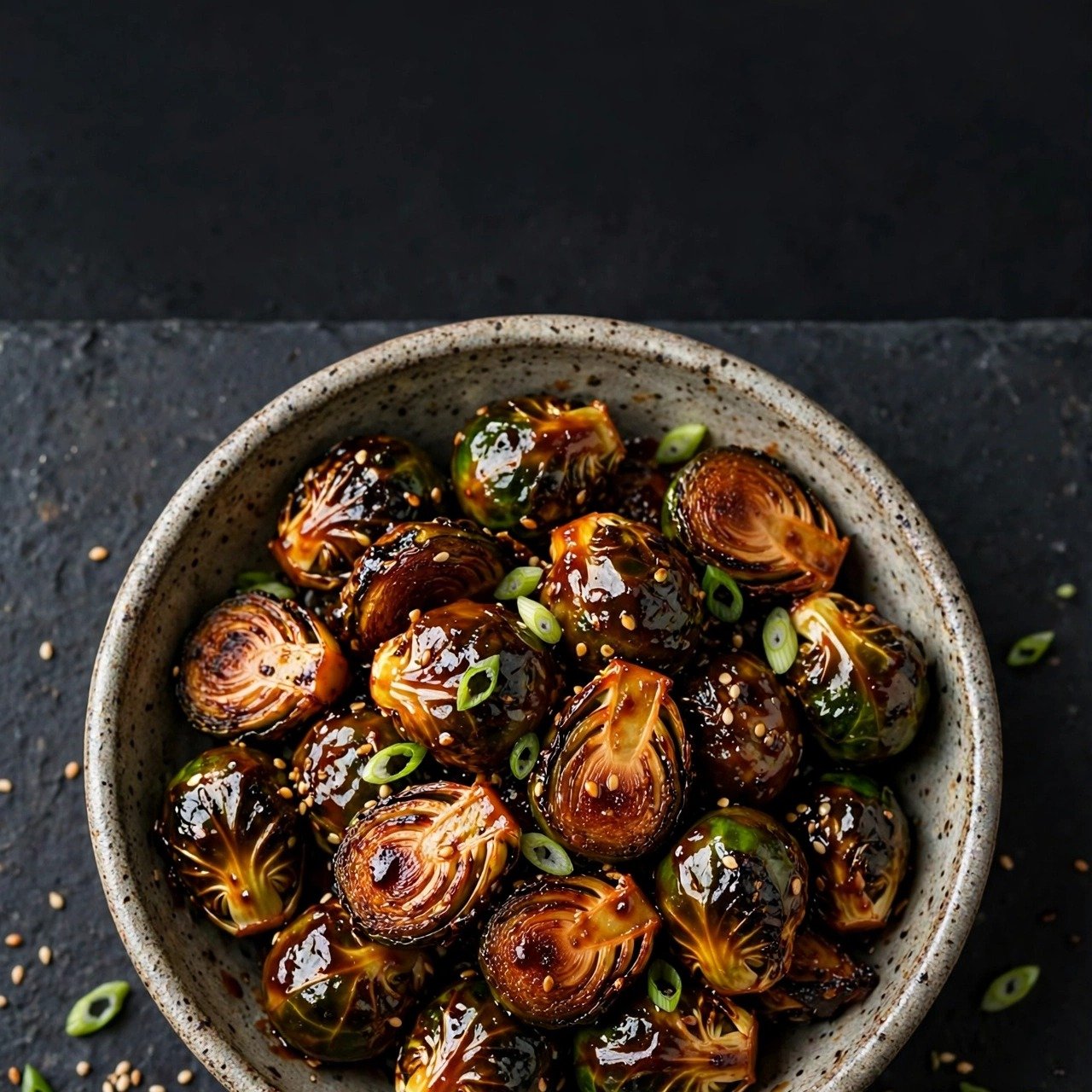
Thanksgiving sides are getting bolder, and these gochujang Brussels sprouts are an easy way to join that shift. They are deeply caramelized outside, tender inside, and coated in a glossy sauce balancing heat, sweetness, salt, and tang. Gochujang, the fermented Korean chili paste, adds slow warmth and savory depth that plain hot sauce cannot match.
The method is what sets this version apart. Many recipes toss raw sprouts in sauce before roasting, so the glaze burns before the centers soften. Here, the sprouts roast first in oil and salt until their cut sides turn dark and crisp. Only then do they meet the warm glaze. That two-step approach protects the sauce, keeps the edges crunchy, and lets the sprouts develop sweetness through browning.
Ingredients You’ll Need
- 2 lb Brussels sprouts, trimmed and halved lengthwise
- 3 tablespoons neutral oil, such as avocado or vegetable oil
- 1 teaspoon kosher salt
- 1/2 teaspoon black pepper
- 3 tablespoons gochujang
- 2 tablespoons honey
- 1 tablespoon rice vinegar
- 1 tablespoon soy sauce
- 1 tablespoon toasted sesame oil
- 2 garlic cloves, finely grated
- 1 teaspoon freshly grated ginger
- 1 tablespoon water, as needed to loosen the glaze
- 2 green onions, thinly sliced, for serving
- 1 tablespoon toasted sesame seeds, for serving
- 1 lime, cut into wedges, for serving
Choose firm sprouts with tight green leaves and no yellow spots. Smaller sprouts, about 1 to 1 1/2 inches wide, cook evenly and char better than oversized ones. Cut the largest into quarters so every piece finishes together.
How to Make Gochujang Brussels Sprouts
- Heat the oven to 425 degrees Fahrenheit and place a large rimmed sheet pan inside while it preheats. A hot pan gives a crisp, dark sear: cold sprouts hitting a preheated surface release moisture fast instead of pooling underneath.
- Trim the woody stem end and peel away loose leaves. Cut each sprout in half through the core so the leaves stay attached. Keep the core intact; it holds the sprout together.
- Toss the halved sprouts with the neutral oil, kosher salt, and black pepper. Rub oil into the cut surfaces until every flat side looks lightly glossy. Dry spots steam instead of browning.
- Remove the hot pan and arrange the sprouts cut-side down in a single layer, leaving at least half an inch between pieces. Crowding traps steam and makes soft, pale sprouts.
- Roast for 20 to 24 minutes, without stirring, until the cut sides are deep golden brown and nearly black at the edges. A fork should slide into the center with gentle resistance. Smaller sprouts may finish at 20 minutes; larger ones need the full 24.
- While the sprouts roast, whisk the gochujang, honey, rice vinegar, soy sauce, sesame oil, garlic, ginger, and water in a small saucepan. Warm over medium-low heat for 2 to 3 minutes, stirring constantly, until smooth and just bubbling at the edges. Do not boil hard; high heat dulls the garlic and can make the honey bitter.
- Transfer the sprouts to a large bowl while still hot. Pour the warm glaze over the top and toss gently with tongs until every piece is coated.
- Spread the glazed sprouts back on the pan and return them to the oven for 3 to 4 minutes. Watch closely. Pull the pan out as soon as the sauce bubbles in the corners; any longer and the sugars will scorch.
- Transfer to a platter and sprinkle with green onions and sesame seeds. Serve at once with lime wedges. A squeeze of lime cuts the richness and wakes up the heat.
Tips for the Best Gochujang Brussels Sprouts Every Time
Start with a hot pan. A cold pan lets sprouts release water slowly, which steams them. A hot pan seals the cut side on contact, creating the dark, nutty crust that makes roasted sprouts taste so good.
Do not move them while they roast. Stirring breaks the contact that creates browning. Leave them cut-side down for the full first roast. The dark color is caramelization, not burning, and it holds most of the flavor.
Glaze after roasting, not before. Gochujang and honey contain sugars that burn at 425 degrees. Sauce on raw sprouts darkens too fast and tastes bitter before the centers soften. Roasting plain first, then glazing briefly, gives charred sprouts and a bright, glossy sauce.
Fix soggy sprouts by giving them space. Soft, pale sprouts mean the pan was too crowded or the sprouts were wet. Dry them well, leave space between pieces, and use a second pan when needed.
Fix bitter centers by checking size. Bitterness usually comes from oversized, undercooked sprouts or leaves that burned while the core stayed raw. Cut large sprouts into quarters. If outer leaves darken too fast, lower the oven to 400 degrees and add 5 minutes.
Balance the heat to your table. Gochujang brands vary in spice. Use the full amount for medium heat, or reduce it to 2 tablespoons and add an extra teaspoon of honey for a gentler version. Taste the glaze first; add vinegar for brightness or salt if it tastes flat.
Easy Variations
1. Honey Garlic Gochujang Brussels Sprouts. The mildest version. Increase the honey to 3 tablespoons, reduce the gochujang to 2 tablespoons, and add 2 extra grated garlic cloves. Roast as in the hero recipe, toss, and finish for 3 minutes. The extra honey caramelizes into a sticky coating while the garlic softens the heat. Finish with sesame seeds and lemon zest instead of lime.
2. Crispy Air Fryer Gochujang Brussels Sprouts. For a small batch, toss the halved sprouts with oil, salt, and pepper, then cook at 400 degrees Fahrenheit for 12 to 14 minutes, shaking the basket once at 7 minutes. Warm the glaze on the stove, toss the hot sprouts in it, and return them to the air fryer for just 2 minutes at 375 degrees.
3. Peanut Crunch Gochujang Brussels Sprouts. Follow the hero recipe through the final glaze step, then toss the hot sprouts with 1/3 cup chopped roasted peanuts, 1 tablespoon chili crisp, and an extra teaspoon of rice vinegar. Add the peanuts after the final bake, not before, so they stay crunchy.
4. Maple Miso Gochujang Brussels Sprouts. Replace the honey with 2 tablespoons of pure maple syrup and whisk 1 tablespoon of white miso into the glaze with the gochujang. The miso adds salt and fermented depth that pairs naturally with turkey and stuffing. Roast, glaze, and finish for 3 to 4 minutes. Sprinkle with toasted pecans instead of sesame seeds.
Storage and Reheating
Store leftovers in an airtight container in the refrigerator for up to 4 days. Reheat on a sheet pan in a 400 degree oven for 8 to 10 minutes, until hot and crisp at the edges, tossing once halfway through.
Avoid the microwave when you can; it turns crisp leaves soft. If it is your only option, heat in 30-second bursts until just warm. Do not freeze cooked sprouts; thawing makes them watery, and the glaze loses its shine.
Frequently Asked Questions
Are gochujang Brussels sprouts very spicy? They are moderately spicy, with warm, slow heat rather than a sharp burn. For a milder dish, use 2 tablespoons of gochujang and an extra teaspoon of honey. For more heat, stir in 1 teaspoon of chili crisp.
Can I make these ahead for Thanksgiving? Yes. Roast the sprouts up to a day ahead and refrigerate them plain, without the glaze, and refrigerate the glaze separately in a jar. On the day, reheat the sprouts at 425 degrees for 8 minutes, warm the glaze, toss, and finish for 3 minutes.
What is gochujang, and where do I find it? Gochujang is a fermented Korean chili paste made from chili powder, glutinous rice, fermented soybeans, and salt. It tastes spicy, slightly sweet, and deeply savory. Find it in the international aisle of large grocery stores, at Asian markets, or online.
Why did my glaze burn? The usual cause is glazing too early or leaving the sprouts in too long after glazing. Honey and gochujang contain sugars that scorch quickly at high heat. Roast plain first, glaze only at the end, and limit the final bake to 3 to 4 minutes.
Nutrition Estimate
This is an estimate only, based on the hero recipe serving 6 people. Each serving contains approximately 145 calories, 8 grams of fat, 16 grams of carbohydrates, 4 grams of fiber, 8 grams of sugar, 4 grams of protein, and 480 milligrams of sodium. Actual values vary with the gochujang brand, oil, and sprout size. This is general guidance only and is not medical advice.
The Bottom Line
These gochujang Brussels sprouts prove that a Thanksgiving side can be bold without being complicated. Roast hot and undisturbed for real char, glaze late so the sauce stays glossy, and finish with lime, green onions, and sesame seeds. One base recipe gives five distinct ways to bring heat and color to the table.