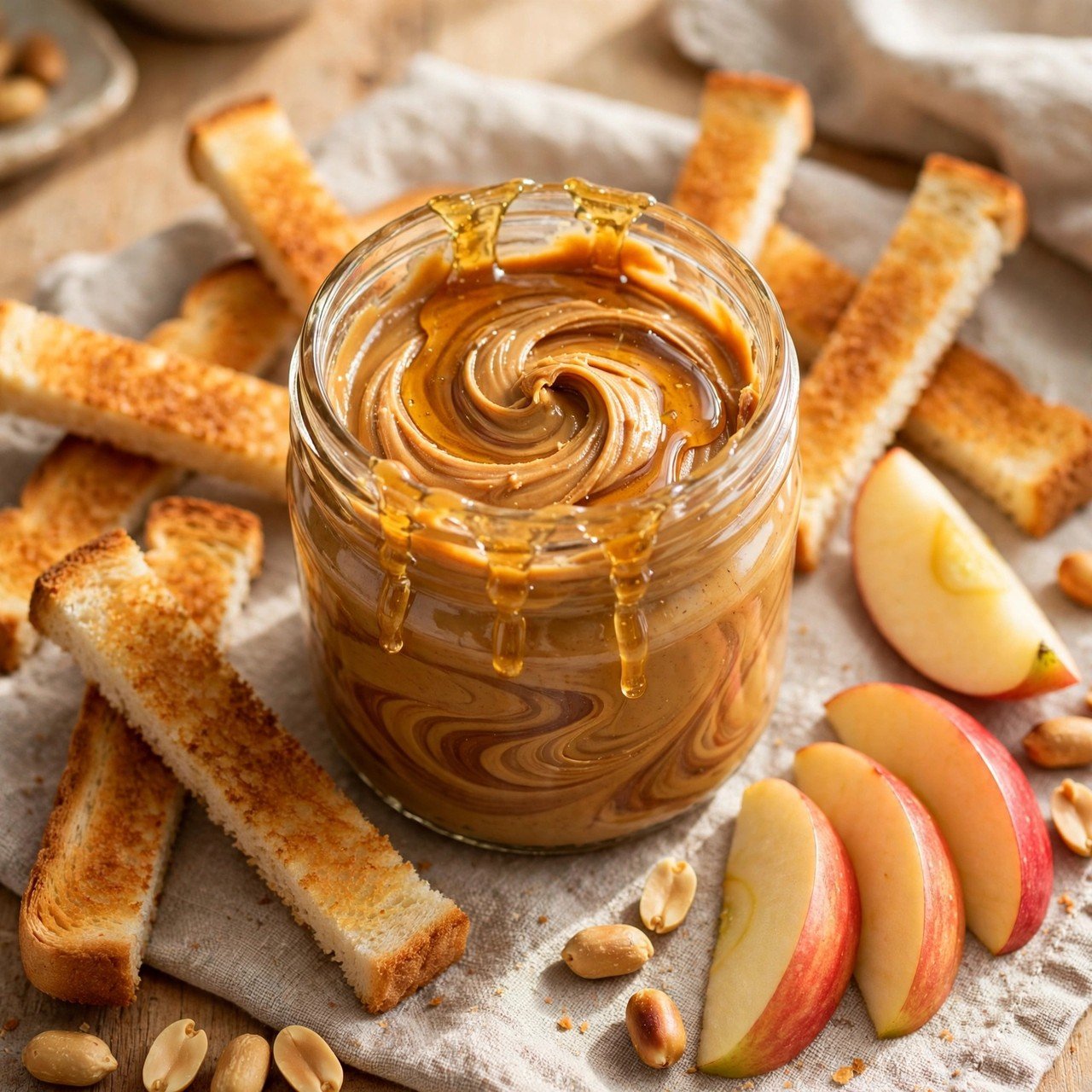
Beanut butter — “bean” plus “peanut” — is the viral spread of October 2026: canned cannellini beans blended with peanut butter until the beans vanish into a silky, spoonable spread. It tastes like peanut butter’s creamier cousin, packs roughly double the protein, and takes five minutes with a food processor and zero cooking. The secret is bean starch: blended long enough, the starches hydrate and turn glossy and velvety instead of tasting beany. These five recipes share that same base method, each with its own twist.
Why You’ll Love These Beanut Butter Recipes
A fifteen-ounce can of cannellini beans carries about fourteen grams of protein and several grams of fiber, and becomes roughly two cups of spread for five minutes of work. The texture is the real surprise — sustained blending hydrates the bean starches so completely that the finished spread reads as nut butter, not hummus. Spread it on toast, pair it with apple slices, swirl it into smoothies or overnight oats, or roll it into energy balls.
1. Classic Honey-Vanilla Beanut Butter
The version that started the trend — pale, glossy, and the base every recipe here builds from.
Ingredients
- 1 can (15 ounces) cannellini beans, drained and rinsed well
- 1/2 cup creamy peanut butter
- 3 tablespoons honey
- 1 1/2 teaspoons pure vanilla extract
- 1/4 teaspoon fine sea salt
- 2 to 4 tablespoons warm water, as needed
Steps
- Rinse the beans under cold water for 30 seconds to wash off the starchy, slightly metallic canning liquid.
- Add beans, peanut butter, honey, vanilla, and salt to a food processor.
- Process 2 minutes, scraping down the sides halfway. It looks crumbly at first — the bean starches need sustained blending to turn silky.
- With the processor running, drizzle in 2 tablespoons warm water and process 1 more minute, adding more water a tablespoon at a time until glossy and spoonable. Warm water helps the peanut oil emulsify; cold water makes the mixture seize.
- Taste and adjust salt or honey. Jar and refrigerate.
2. Chocolate Beanut Butter
A lighter chocolate-nut spread without the palm oil. Great on banana toast, as a fruit dip, or swirled into yogurt.
Ingredients
- 1 can (15 ounces) cannellini beans, drained and rinsed well
- 1/2 cup creamy peanut butter
- 1/4 cup unsweetened cocoa powder
- 1/3 cup pure maple syrup
- 1 teaspoon pure vanilla extract
- 1/4 teaspoon fine sea salt
- 2 to 4 tablespoons warm water, as needed
Steps
- Rinse and drain the beans thoroughly.
- Add everything except the water to the food processor.
- Process 2 minutes, scraping well halfway — hidden pockets of dry cocoa are the main cause of a gritty finish.
- Drizzle in 2 tablespoons warm water with the processor running; process 1 more minute until dark and glossy. Thin with more water a tablespoon at a time if stiff.
- If the cocoa reads bitter, add another tablespoon of maple syrup and process 15 seconds. Jar and refrigerate.
3. Cinnamon-Maple Beanut Butter
Warm, cookie-like, and the best of the five for overnight oats and apple slices.
Ingredients
- 1 can (15 ounces) cannellini beans, drained and rinsed well
- 1/2 cup creamy peanut butter
- 1/4 cup pure maple syrup
- 1 1/2 teaspoons ground cinnamon
- 1/2 teaspoon pure vanilla extract
- 1/4 teaspoon fine sea salt
- 2 to 4 tablespoons warm water, as needed
Steps
- Rinse and drain the beans thoroughly.
- Add everything except the water to the food processor.
- Process 2 minutes, scraping once. Cinnamon can make the mixture look smooth before it truly is, so trust the timer.
- Add 2 tablespoons warm water with the processor running; process 1 more minute. Thin with more water a tablespoon at a time as needed.
- Taste and adjust sweetness or cinnamon. Jar and refrigerate.
4. Salted Caramel-Style Beanut Butter
Medjool dates give genuine caramel notes — no caramel sauce, no refined sugar. Excellent on graham crackers and warm pancakes.
Ingredients
- 1 can (15 ounces) cannellini beans, drained and rinsed well
- 1/2 cup creamy peanut butter
- 6 Medjool dates, pitted and chopped
- 1 tablespoon pure maple syrup (optional)
- 1 teaspoon pure vanilla extract
- 1/2 teaspoon flaky sea salt, plus more to taste
- 2 to 4 tablespoons warm water, as needed
Steps
- If the dates feel firm, soak the chopped pieces in hot water 5 minutes, then drain — dry dates never fully blend.
- Add everything except the water to the food processor.
- Process 2 1/2 minutes, scraping twice — dates need the extra 30 seconds to fully break down.
- Drizzle in 2 tablespoons warm water with the processor running; process 1 more minute until completely smooth. Thin with more water as needed.
- Taste for balance: the salt should be noticeable but not dominant. Jar and refrigerate.
5. Peanut Butter Banana Beanut Butter
The breakfast version — sweeter and a little looser, perfect stirred into overnight oats or blended into smoothies. Use a ripe banana with brown spots.
Ingredients
- 1 can (15 ounces) cannellini beans, drained and rinsed well
- 1/2 cup creamy peanut butter
- 1 medium very ripe banana, broken into chunks
- 2 tablespoons honey
- 1/2 teaspoon pure vanilla extract
- 1/4 teaspoon fine sea salt
- 1 to 3 tablespoons warm water, as needed
Steps
- Rinse and drain the beans. Add everything except the water to the food processor.
- Process 2 minutes, scraping once. The banana adds moisture, so add water only afterward if it looks thick — a tablespoon at a time with the processor running.
- Taste and adjust honey. Jar and refrigerate; use within 4 days because of the fresh banana.
Tips for the Best Beanut Butter Every Time
Rinse the beans for a full 30 seconds — the canning liquid carries a faintly metallic flavor straight through if you skip it. Then give the processor the full two minutes; stopping at 45 seconds gives you something that tastes like beans, while two minutes gives you peanut butter’s silkier cousin. Always use warm water, not cold — cold water makes the peanut oil seize, while warm water helps everything emulsify into a glossy finish.
Troubleshooting: grainy means under-processed — run another minute and scrape well. Too thick — warm water, a tablespoon at a time, machine running. Faintly beany — another pinch of salt and a half teaspoon of vanilla push the flavor toward the peanut side. Flat overall — salt is almost always the answer, because bean starch mutes flavors more than you’d expect. Natural peanut butter makes a looser spread needing less water; classic processed peanut butter makes a thicker one. Both work.
Easy Variations
Treat the classic as a template. Swap honey for agave to make it vegan, or use sugar-free maple syrup for lower sugar. Stir two tablespoons of rolled oats into the finished spread and roll into bite-sized energy balls — chill 30 minutes for lunchboxes. For a savory dip, make the classic with just beans, peanut butter, salt, and a squeeze of lime, and serve with celery and bell peppers. Stir in mini chocolate chips, shredded coconut, or chopped roasted peanuts for crunch. For extra protein, blend in one scoop of protein powder with an extra tablespoon or two of warm water. For a pourable drizzle, keep adding warm water a tablespoon at a time until it flows.
Storage and Reheating
Beanut butter is fresh and perishable — no cooking step, no preservatives — so refrigerate it immediately in a clean jar with a tight lid. It keeps 5 to 7 days (4 days for the banana version). It firms up in the cold as the starches set; let the jar sit out 10 to 15 minutes before serving, or stir in a teaspoon of warm water to loosen it.
Food safety basics: use a clean spoon every time, don’t leave the jar out more than 2 hours, and discard the batch at any off smell, sourness, or mold — beans are a low-acid food, so don’t salvage a questionable jar. It freezes well for up to 2 months; thaw overnight in the refrigerator and stir vigorously to restore creaminess. For a warm drizzle, microwave a serving about 10 seconds and stir — but don’t overheat it, or the peanut oil separates and it turns greasy.
Frequently Asked Questions
Does beanut butter actually taste like peanut butter?
Close enough that most people are surprised. Peanut butter is still the dominant flavor; the beans contribute body and creaminess, not flavor, once fully blended — silkier and a touch milder than straight peanut butter.
Why cannellini beans instead of chickpeas?
Cannellini beans are milder and creamier, with thinner skins that break down more completely. Chickpeas give you hummus texture no matter how long you blend; cannellini beans get you closer to nut butter. Great Northern beans also work.
Can I make it without a food processor?
A high-speed blender can work with frequent scraping, but a regular blender usually can’t get the beans fine enough and leaves a gritty spread.
Is beanut butter good for kids?
It’s a solid lunchbox option — high in protein and fiber, lower in fat than plain peanut butter. Two caveats: it still contains peanuts, so it’s not safe for peanut-allergic children, and it needs refrigeration, so pack an ice pack.
How much protein is in it?
A two-tablespoon serving of the classic version has about 5 to 6 grams of protein — roughly double many commercial flavored spreads, thanks to the beans.
Nutrition Estimate
Estimate only — values vary with your peanut butter, sweetener, and bean brand. Per 2-tablespoon serving of the classic honey-vanilla version: approximately 130 calories, 6 g protein, 7 g fat, 12 g carbohydrates, 3 g fiber, 7 g sugars. This is a home-kitchen estimate, not lab-tested data or medical advice.
The Bottom Line
Beanut butter earned its viral moment honestly: five minutes, one can of beans, and a food processor produce a spread silkier than peanut butter, higher in protein and fiber, and endlessly customizable. Start with the classic honey-vanilla to learn the method, then pick your mood — chocolate for dessert cravings, cinnamon-maple for fall mornings, salted caramel for something indulgent, or banana for breakfast. Keep it refrigerated, use it within the week, and don’t be surprised when the jar empties fast.