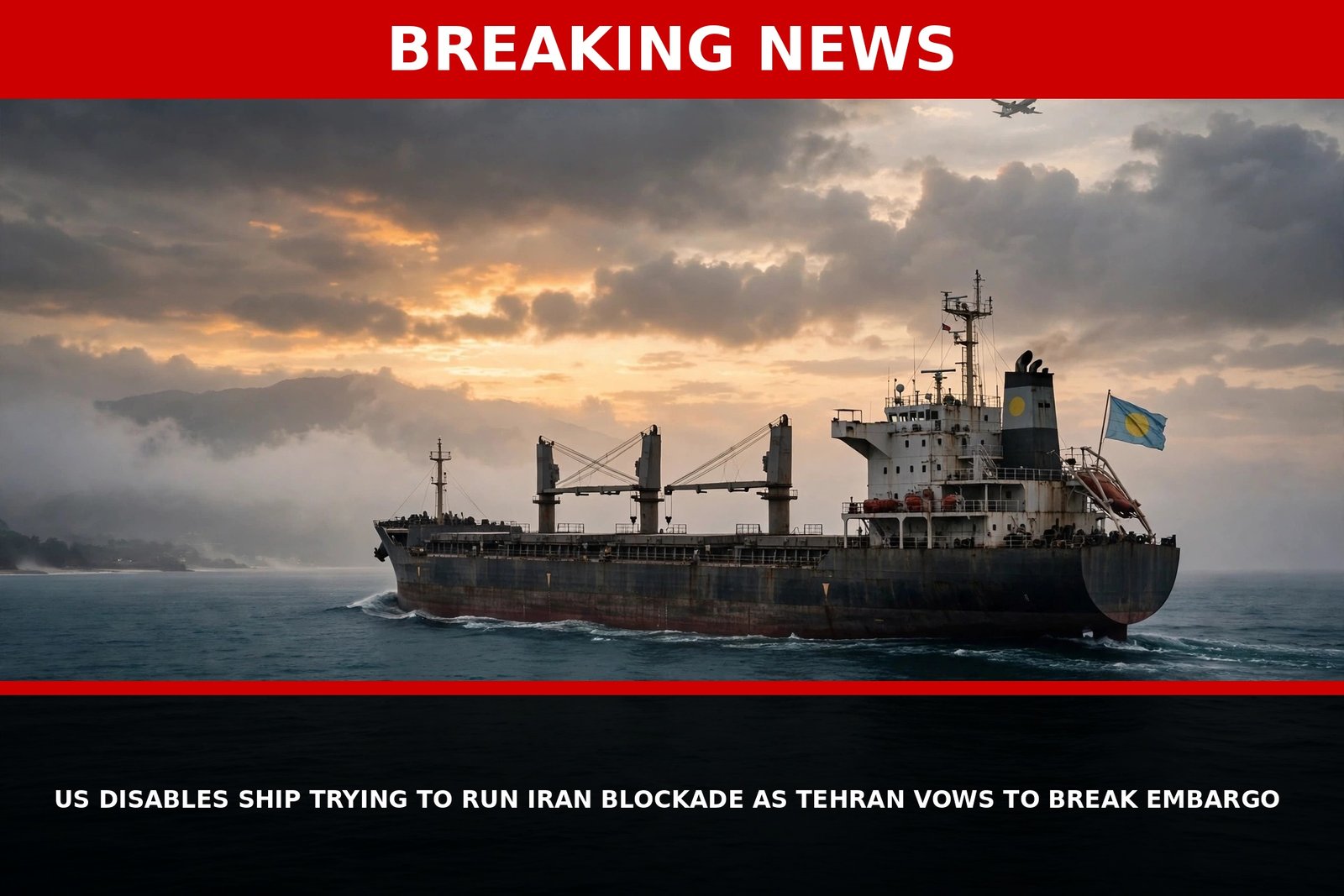
The United States military disabled a commercial ship in the Gulf of Oman on Thanksgiving Day after it tried to run the American naval blockade of Iranian ports, US Central Command said on Friday, in the latest escalation of a months-long maritime standoff with Tehran.
A military aircraft fired precision munitions at the stern of the Palau-flagged bulk carrier M/V Pacific Archer on Thursday, November 26, disabling its propulsion system. The civilian crew was unharmed, CENTCOM said in a statement. The ship had departed the Iranian port city of Bandar Abbas before attempting to transit regional waters, and ship-tracking websites listed its destination as Singapore.
CENTCOM said the vessel ignored repeated warnings before the strike, a pattern the command says it follows in every such encounter: American forces issue multiple warnings and only fire on ships that refuse to comply.
A blockade now in its eighth month
The Pacific Archer is at least the 15th vessel the US military has publicly acknowledged disabling since the blockade of Iranian ports began in April, and the sixth since the blockade resumed in July after a pause during talks with Tehran. The previous vessel was disabled on November 7.
US forces say they have redirected 158 merchant ships that complied with blockade instructions. The blockade, which targets Iran’s oil exports and the revenue they generate, has squeezed the Iranian economy and become one of the main pressure points in the confrontation between Washington and Tehran.
The strike comes as the Trump administration weighs its options in the long-running war with Iran, which began at the end of February and has settled into a quiet stalemate in recent months. President Donald Trump, asked about the confrontation, said he would end the war “when I want to,” according to CBS News.
Tehran vows to break the embargo
Iran responded defiantly. An adviser to the Iranian supreme leader said Iran would keep the Strait of Hormuz shut while vowing to break the embargo, and senior Iranian officials threatened military action in the air and at sea.
The Strait of Hormuz, the narrow waterway between Iran and Oman through which roughly a fifth of the world’s oil supply passes, has been a recurring flashpoint. Any sustained closure would send shockwaves through global energy markets, though Iran has threatened to shut the strait before without following through.
The claims around the incident could not be independently verified, and it was not immediately clear what cargo the Pacific Archer was carrying or who owned it. US officials have previously said the vessels targeted in the blockade are part of a shadow fleet moving Iranian oil in defiance of sanctions.
Why it matters
Each disabled ship is a signal as much as a sanction. Washington is showing it will use force to enforce the blockade, even on a holiday, while Tehran is showing it will keep testing the line — and daring the US to respond. The pattern of warnings followed by precision strikes on a ship’s stern, leaving the crew unharmed, is designed to disable without killing, keeping the confrontation below the threshold of open war.
But the margin for error is thin. A miscalculation in the Gulf of Oman, the Strait of Hormuz or the airspace above them could turn a blockade enforcement action into a wider clash, at a moment when the war between the two countries has been quiet but unresolved for months.
What happens next
The Pacific Archer is now disabled in the Gulf of Oman, and its fate — whether it is boarded, towed or left adrift — has not been announced. CENTCOM is expected to release further details, including any imagery of the strike, in the coming days.
Attention now turns to whether Tehran follows through on its vow to break the embargo and whether more ships attempt to run the blockade in the days ahead. Each attempt forces the same choice on both sides: Washington must decide whether to fire again, and Tehran must decide whether the risk of losing another vessel is worth the challenge.
Featured image: AI-generated news illustration for Apkwonders News. Sources: reporting verified November 28, 2026, including Reuters, Associated Press via Military.com, Al Jazeera and The Wall Street Journal.