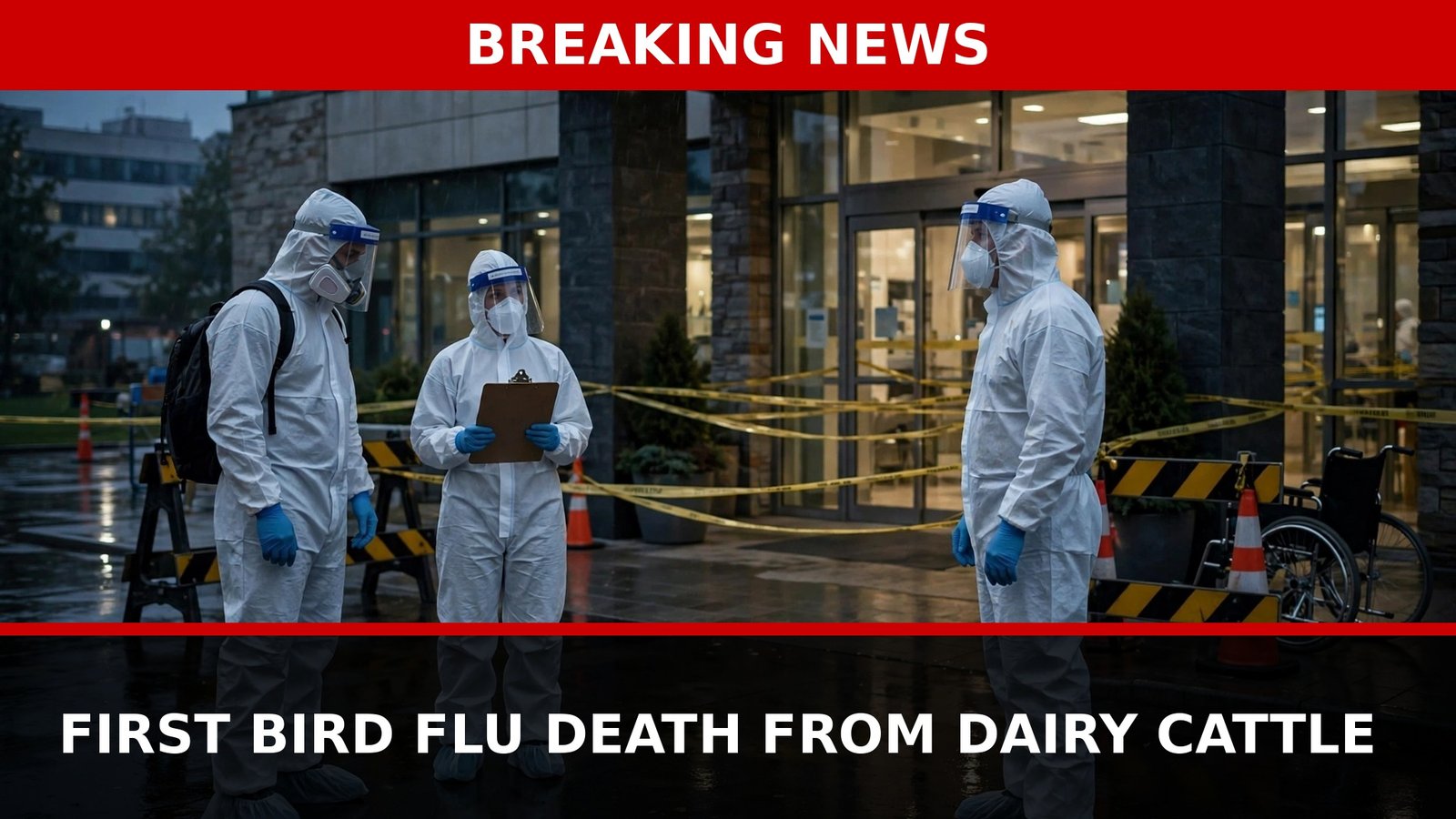
The World Health Organization has confirmed three human infections with H5N1 bird flu among dairy workers in Washington state, including one death — the first death reported globally following exposure to infected dairy cattle.
The WHO said on Tuesday, November 24, that the United States had notified it of three laboratory-confirmed cases, reported between October 16 and November 4. All three patients were adults who worked on dairy cattle farms in Yakima County, Washington, where the virus had recently been detected in cattle.
What happened
- Patient 1: mild symptoms, including eye irritation and a runny nose. Not hospitalised.
- Patient 2: underlying health conditions, developed severe respiratory illness and died on November 1.
- Patient 3: developed conjunctivitis and recovered without hospitalisation.
Genetic sequencing confirmed all three infections were caused by the H5N1 virus, with strains closely matching those detected in dairy cattle in Washington. County officials have reported that 33 dairy herds recently tested positive for H5N1.
More than 70 human infections have been reported in the US since the beginning of 2024, according to the CDC. The CDC said it analysed the genetic sequence of the virus from the person who died and found no changes that would make it spread more easily or cause more severe illness.
Why it matters
H5N1 bird flu is a subtype of influenza A that primarily infects wild and domestic birds, and occasionally spreads to mammals, including humans. Until now, no death had been reported following exposure to infected dairy cattle or a related contaminated environment.
The WHO assessed the risk to the general population as low, and said there was no evidence so far of human-to-human transmission. Investigations and monitoring of exposed individuals and close contacts are ongoing.
What happens next
Health officials are monitoring close contacts of the three patients and testing dairy herds in the area. For the public, the message from the WHO is unchanged: the risk is low, but anyone working with dairy cattle or poultry should follow protective guidance and report flu-like symptoms early.
Featured image: AI-generated news illustration for Apkwonders News, headline matches this article. Sources: reporting verified November 28, 2026, including NHK World, Associated Press and Mid-Day / Reuters.