Why You’ll Love This Egg Katsu
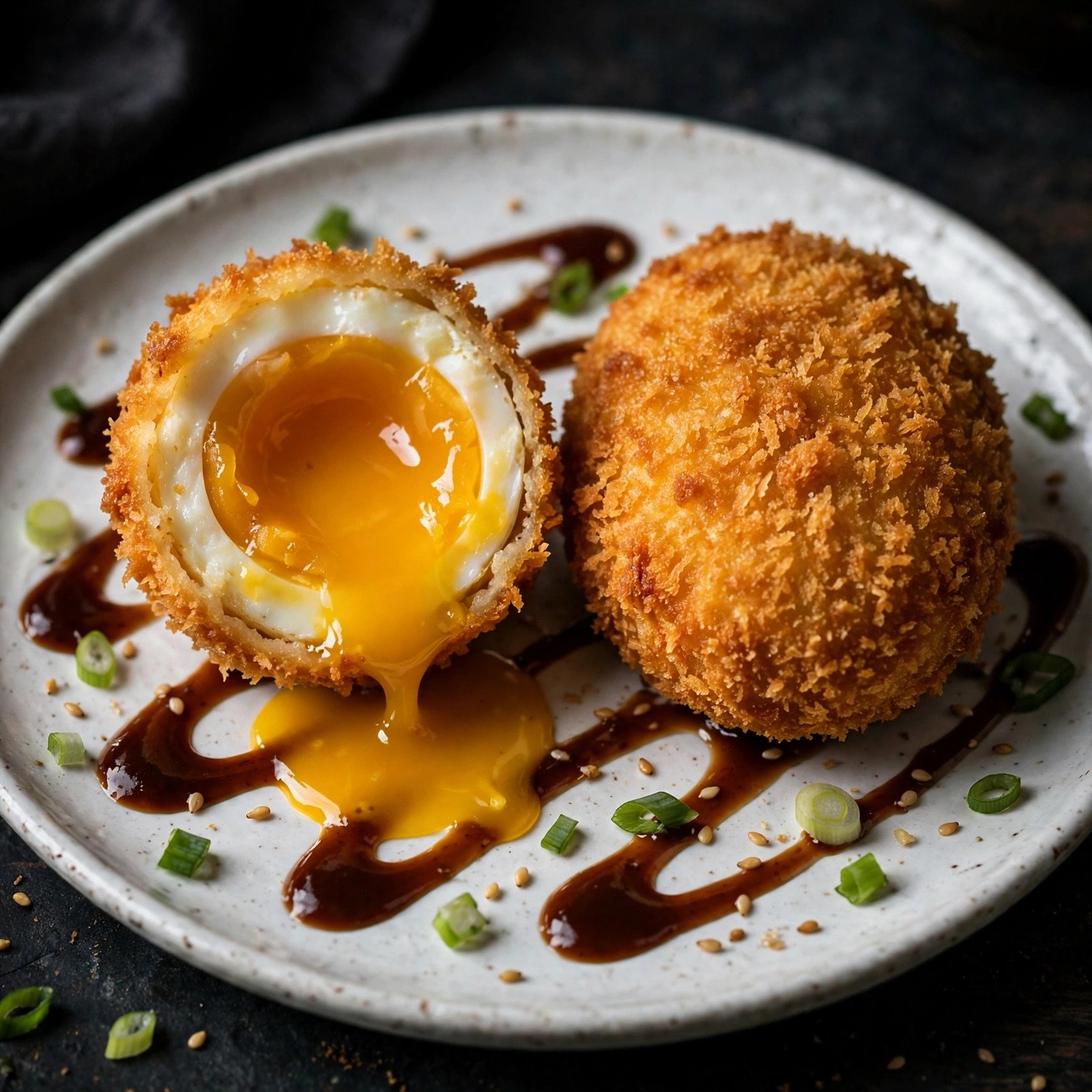
Egg katsu is the internet’s latest obsession: a jammy, soft-boiled egg wrapped in seasoned pork or chicken, coated in crisp panko, and fried until golden — slice it open and the molten yolk spills out over the crunchy shell. It sounds like restaurant magic, but it’s really just three simple techniques stacked together, and this recipe walks you through all of them.
Our version stands apart because of two details most recipes skip. First, we use a flour-then-egg-then-panko breading with a touch of rice flour in the dredge, which gives you a shell that shatters audibly instead of turning soggy within minutes. Second, we chill the wrapped eggs for 20 minutes before breading — the number-one fix for the classic failure where the meat layer splits open in the hot oil and the whole thing falls apart. That short rest firms the wrap so it survives frying intact.
Egg katsu hits that perfect sweet spot of impressive and achievable. You need no special equipment — a pot, a thermometer, and a slotted spoon do the job — and the total active time is under 40 minutes. Slice one open at the table and watch everyone’s face: that’s the whole point.
This is the snack that turns a regular weeknight into something worth talking about, and it doubles as a show-stopping appetizer for game day or a party spread.
Ingredients You’ll Need
For the Jammy Eggs
- 5 large eggs, at room temperature (cold eggs crack in boiling water)
- Ice water, for the ice bath
For the Meat Wrap
- 1 lb ground pork (80/20) — or half pork, half ground chicken
- 1/4 cup panko breadcrumbs
- 1 large egg
- 2 cloves garlic, minced
- 1 teaspoon fresh ginger, grated
- 2 scallions, finely chopped
- 1 tablespoon soy sauce
- 1 teaspoon toasted sesame oil
- 1/2 teaspoon fine sea salt
- 1/2 teaspoon white pepper
For Breading and Frying
- 1/2 cup all-purpose flour
- 2 tablespoons rice flour (the crispness secret)
- 2 large eggs, beaten
- 1 1/2 cups panko breadcrumbs
- Neutral oil for frying (vegetable, canola, or peanut) — about 4 cups
For Serving
- Tonkatsu sauce or kewpie mayo mixed with a squeeze of sriracha
- Extra sliced scallions and toasted sesame seeds
- Soft-boil the eggs. Bring a medium pot of water to a rolling boil. Lower the room-temperature eggs in gently with a slotted spoon and set a timer for exactly 6 1/2 minutes. At 6 1/2 minutes the whites are fully set and the yolk is jammy — soft but not runny. Runny yolks (6 minutes) leak during frying; hard yolks (8 minutes) miss the magic. Transfer immediately to an ice bath and cool for 5 minutes. Peel under running water, starting from the wide end where the air pocket sits — the shell slips off in large pieces. Pat the eggs completely dry with paper towels; wet eggs won’t hold the meat wrap.
- Mix the meat wrap. In a bowl, combine the ground pork, panko, egg, garlic, ginger, scallions, soy sauce, sesame oil, salt, and white pepper. Mix with your hands just until combined — about 30 seconds. Over-mixing develops the proteins and makes the wrap rubbery and dense instead of tender. Divide into 5 equal portions (about 3 oz each) and flatten each into a rough disk on a piece of plastic wrap.
- Wrap the eggs. With damp hands, place one egg in the center of a meat disk and mold the meat up and around it, sealing all seams. Roll gently between your palms into a smooth ball about the size of a large lemon. The meat should be a uniform 1/2-inch thick — thinner spots are where splits start. Press seams closed firmly. Arrange on a plate, cover, and refrigerate for 20 minutes. This chill is what keeps the wrap from splitting in the hot oil: cold, firm meat holds its shape as the exterior sears.
- Set up the breading station. Three shallow dishes: (1) flour plus rice flour whisked together, (2) the two beaten eggs, (3) panko. The rice flour is not optional garnish — its low protein and fine granules fry up glassy-crisp and stay crunchy longer than wheat flour alone.
- Bread the chilled eggs. Roll each chilled meat-wrapped egg in the flour mixture, tapping off excess — you want a thin, even coat, since bare spots won’t hold egg wash. Dip in beaten egg, letting the excess drip off for 3 seconds, then roll firmly in panko, pressing gently so the crumbs adhere. For maximum crunch, double-dip: back into the egg wash and panko once more. Rest the breaded eggs on a rack while the oil heats.
- Heat the oil to 340°F. Pour oil 2 inches deep into a heavy pot or Dutch oven and heat over medium heat until a thermometer reads 340°F. This temperature is deliberate: hotter and the panko burns before the pork cooks through; cooler and the crust absorbs oil and turns greasy. Adjust the heat between batches to hold 335–345°F.
- Fry until deep golden. Lower 2 to 3 eggs at a time into the oil — crowding drops the temperature and causes sogginess. Fry for 4 to 5 minutes, turning every minute with a slotted spoon, until the crust is a deep, even golden brown. The pork is done when the internal temperature reaches 160°F on an instant-read thermometer; check one sacrificial egg from the first batch to calibrate your timing.
- Drain and rest. Lift out with a slotted spoon and drain on a wire rack set over a sheet pan — never on paper towels, which trap steam and soften the crust. Rest 3 minutes; the yolk continues to set slightly and the crust firms up.
- Slice and serve. Use your sharpest knife and cut each katsu in half in one confident stroke — sawing drags the yolk. The reveal should show a molten golden center. Serve immediately with tonkatsu sauce or spicy kewpie mayo, scattered scallions, and sesame seeds.
How to Make Egg Katsu
Tips for the Best Egg Katsu Every Time
Dry everything before wrapping. A dry peeled egg and dry hands are the difference between a wrap that clings and one that slides. Paper-towel the eggs, then dampen (not soak) your hands so the meat doesn’t stick to you instead.
Don’t skip the 20-minute chill. This single step prevents the split-wrap disaster. Warm, soft meat relaxes and pulls apart the moment it hits hot oil; chilled, firmed meat sears into place first.
Keep the oil at 340°F. A thermometer is the difference between shattering-crisp and sad-greasy. If you don’t own one, they cost under $15 and will transform every frying project you attempt. Test crumbs should sizzle vigorously and rise immediately when they hit the oil.
Press the panko on. Loose panko falls off in the oil and burns on the pot bottom. Press each crumb layer firmly with your palms — adhesion is everything.
Slice with confidence. The money shot depends on a clean cut. A dull knife drags yolk across the plate. Hone your chef’s knife first, wipe between halves, and cut in one smooth motion.
Season the meat boldly. The pork layer is thick — it needs assertive seasoning to taste like anything. Taste a tiny pinch of the raw mix (cook a pea-sized piece in a skillet for 10 seconds if you’re cautious) and adjust the salt and soy before wrapping.
Easy Variations
Chicken katsu egg: Swap the pork for ground chicken thigh (not breast — breast dries out). Add 1 extra teaspoon of sesame oil for richness.
Spicy kimchi katsu egg: Fold 1/4 cup finely chopped, well-squeezed kimchi into the meat mix and add 1 teaspoon gochujang to the egg wash. Serve with plain kewpie mayo to cool the heat.
Cheese-stuffed katsu egg: Press a small cube of mozzarella into the meat wrap opposite the egg before sealing. It melts into a gooey pocket — slice carefully, it’s molten.
Air fryer version: Bread as directed, spray generously with oil, and air-fry at 380°F for 12 to 14 minutes, flipping halfway. The crust won’t be quite as shattering as deep-fried, but it’s genuinely good and weeknight-friendly.
Breakfast katsu egg: Wrap with breakfast sausage instead of seasoned pork, serve halved over toast with hot sauce. The jammy yolk becomes the sauce.
Storage and Reheating
Egg katsu is at its absolute best within 15 minutes of frying — the crust is crispest and the yolk is at peak flow. That said, leftovers keep in the refrigerator for up to 2 days in an airtight container. To reheat, never use the microwave (it turns the panko to rubber and overcooks the yolk): place on a rack in a 375°F oven or air fryer for 8 to 10 minutes until the crust re-crisp and the center is warmed through. The yolk won’t be molten on day two, but it will still be delicious. Do not freeze cooked egg katsu — the yolk texture suffers badly on thawing. You can, however, freeze the unbaked breaded eggs for up to 1 month; fry straight from frozen at 330°F for 6 to 7 minutes.
Frequently Asked Questions
Why did my meat wrap split open while frying? Three usual culprits: you skipped the 20-minute chill, the oil was too cool (below 320°F) so the crust didn’t set fast enough, or the wrap was uneven and thin in spots. Chill, thermometer-check the oil, and keep the meat layer an even 1/2 inch.
Can I bake these instead of frying? You can, but manage expectations. Bake breaded eggs at 400°F on a rack for 18 to 20 minutes, spraying with oil halfway. The crust browns but never reaches deep-fried shatter. The air fryer version above is the better compromise.
My yolk was fully cooked. What happened? Either the eggs boiled too long (even 30 extra seconds matters at this size) or you fried too long. Verify your timer at 6 1/2 minutes for the boil, and pull the katsu the moment the crust is deep golden — carryover heat finishes the job.
Can I use soft-boiled eggs from the store? The pre-peeled jammy eggs sold at some Asian markets work well and save time. Make sure they’re thoroughly dry before wrapping, and use them within a day of purchase.
Is the pork definitely cooked through? With a 1/2-inch meat layer fried 4 to 5 minutes at 340°F, yes — but trust the thermometer, not the clock. Ground pork must hit 160°F internally. Check the first batch and adjust your timing for the rest.
What oil is best for frying? Any neutral oil with a high smoke point: vegetable, canola, peanut, or refined avocado oil. Don’t use olive oil — its flavor competes and its smoke point is too low for a 5-minute fry.
Nutrition Estimate
The following is an estimate per katsu egg (1 of 5), fried as directed: approximately 420 calories, 28g fat, 18g carbohydrates, 24g protein, and 620mg sodium. This is a rough estimate only — actual values vary with oil absorption, brands, and portion size. It is not medical or dietary advice; consult a registered dietitian for personalized guidance.
The Bottom Line
Egg katsu looks like something you’d only order at a restaurant, but it’s a home-cook-friendly project built from three techniques you already know: boiling an egg, seasoning ground meat, and frying. Nail the 6 1/2-minute egg, chill the wrap, hold 340°F, and you’ll slice into a molten-yolk center that gets audible reactions. Make five, serve them hot, and don’t expect leftovers.