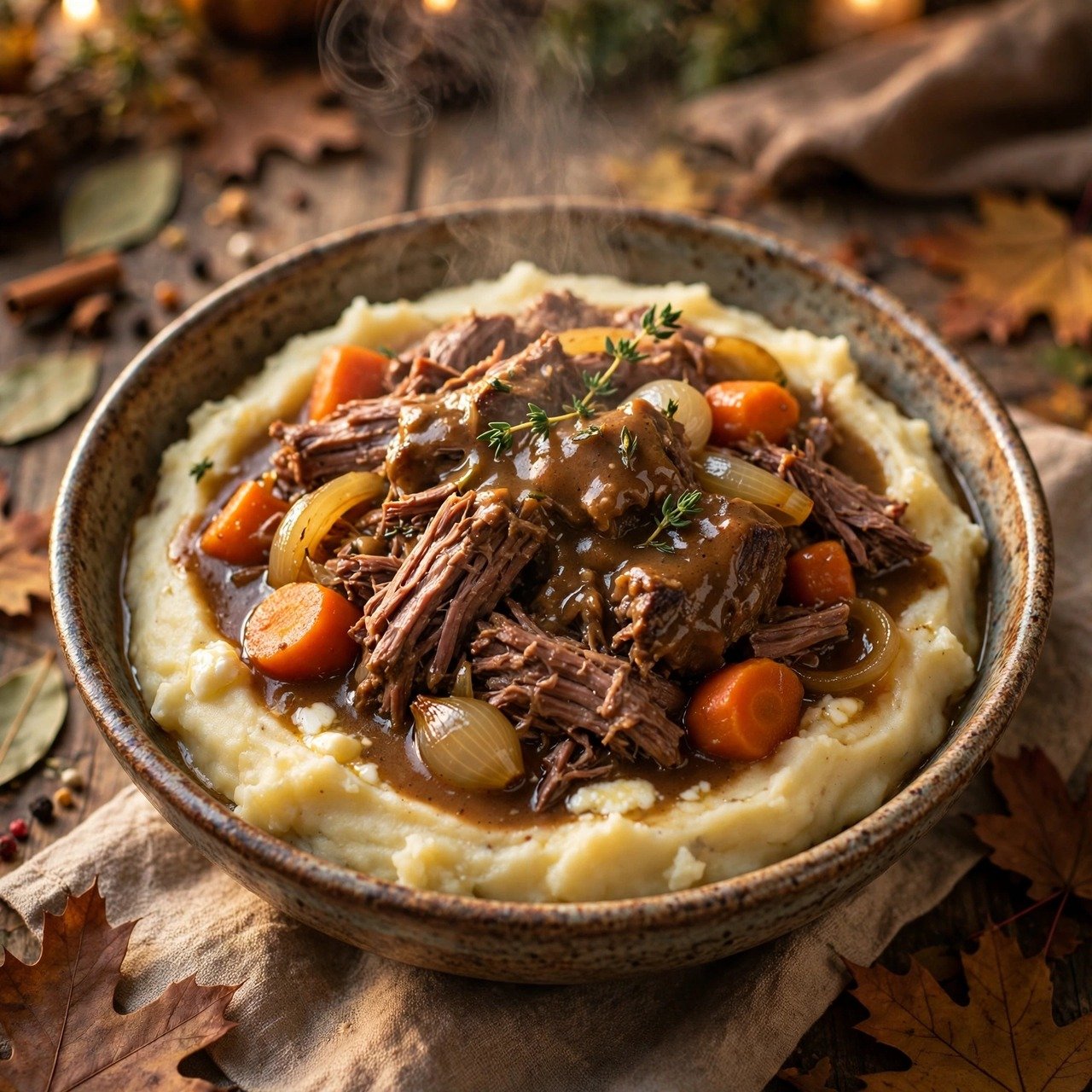
Pot roast is the most-saved dinner on TikTok right now. A chuck roast goes into the oven tough and unpromising, and hours later it comes out so tender you can pull it apart with a fork. Here is one base method, plus five versions to rotate through the season.
Why You’ll Love This Pot Roast
Pot roast asks very little of the cook and gives back a great deal. The oven does the real work while you go about your day, and the result tastes like you spent all afternoon fussing over it. Chuck roast is also one of the most affordable cuts of beef per pound, so it feeds a family of six on a budget. Unlike a steak, pot roast is forgiving by design: the low, slow braise turns tough connective tissue into silky gelatin, so the longer it cooks, the more tender it gets.
Ingredients You’ll Need
For the roast, you will need a 3 to 3.5 pound boneless beef chuck roast, 2 teaspoons kosher salt, 1 teaspoon black pepper, 1 teaspoon garlic powder, 1 teaspoon onion powder, 2 tablespoons olive oil, 1 large yellow onion cut into thick wedges, 4 cloves garlic smashed, 3 large carrots cut into 2-inch chunks, 2 cups low-sodium beef broth, 1 tablespoon tomato paste, 1 tablespoon Worcestershire sauce, 2 teaspoons fresh thyme, 2 bay leaves, and 1 tablespoon cornstarch mixed with 2 tablespoons cold water. For the mashed potatoes, you will need 2.5 pounds Yukon Gold potatoes peeled and quartered, 6 tablespoons unsalted butter, 3/4 cup whole milk warmed, 1/2 teaspoon kosher salt, and 1/4 teaspoon white pepper.
How to Make Pot Roast with Mashed Potatoes
- Season and rest the roast. Pat the chuck roast dry, then season generously on all sides with the salt, pepper, garlic powder, and onion powder. Let it sit at room temperature for 30 minutes.
- Sear for real browning. Heat the olive oil in a large Dutch oven over medium-high heat until it shimmers. Sear the roast for 4 to 5 minutes per side, until a deep mahogany crust forms, without moving it.
- Build the braising liquid. Remove the roast to a plate. Lower the heat to medium, add the onion wedges, and cook for 3 minutes. Stir in the garlic and tomato paste and cook for 1 minute more. Pour in the beef broth and scrape up every browned bit stuck to the bottom of the pot. Stir in the Worcestershire sauce and thyme.
- Braise low and slow. Return the roast to the pot, nestle the carrots around it, and tuck in the bay leaves. The liquid should come about halfway up the sides of the roast. Cover and transfer to a 300°F oven for 3 to 3.5 hours, until the meat yields easily to a fork.
- Rest the roast. Lift the roast and carrots onto a cutting board and tent loosely with foil. Rest for 15 minutes before slicing, so the juices redistribute.
- Make the gravy. While the roast rests, bring the braising liquid to a gentle simmer, whisk in the cornstarch slurry, and cook for 2 to 3 minutes until the gravy coats the back of a spoon. Taste and adjust the salt.
- Mash the potatoes. While the roast braises, cover the potatoes with cold water by an inch, add a tablespoon of salt, and bring to a boil. Cook for 18 to 20 minutes until a knife slides through with no resistance. Drain well, then mash with the butter and warm milk until smooth. Warm milk matters: cold milk cools the potatoes and forces extra mashing, which is how they turn gluey.
Five Pot Roast Variations
1) Classic Sunday Pot Roast
This is the base method exactly as written above, and it is the version to master first. The carrots and onions cook in the braising liquid until sweet and spoon-tender. Add a pound of baby potatoes to the pot during the last hour for a true one-pot dinner.
2) Slow Cooker Pot Roast
Timing changes, but flavor does not, as long as you still sear the roast first in a hot skillet. Transfer everything to a slow cooker and cook on low for 8 hours or on high for 4.5 to 5 hours, until the meat shreds with a fork. Reduce the broth to 1.5 cups, since the slow cooker traps more moisture.
3) Mississippi Pot Roast
This is the viral version that started the whole pot roast craze. Sear the roast as usual, then place it in the slow cooker or Dutch oven with one packet of ranch seasoning mix, one packet of au jus gravy mix, a half cup of sliced pepperoncini peppers with a splash of their brine, and a whole stick of butter laid on top. The pepperoncini bring a tangy heat that cuts the richness, and the butter and seasoning packets melt into a gravy that needs no thickening.
4) Red Wine Braised Pot Roast
Replace one cup of the beef broth with one cup of dry red wine, such as a Côtes du Rhône or a Chianti, and add 2 tablespoons of balsamic vinegar. The wine’s acidity helps break down the connective tissue a little faster, and as it reduces it leaves behind a deep, complex gravy with a faint sweetness.
5) Garlic Butter Herb Pot Roast
After searing, rub the roast all over with a paste made from 6 minced garlic cloves, 3 tablespoons softened butter, 1 tablespoon chopped fresh rosemary, 1 tablespoon chopped fresh thyme, and the zest of half a lemon. Braise as usual, then baste the roast with the pan juices during the last 30 minutes. The lemon zest lifts the dish so the richness never feels heavy.
Tips for the Best Pot Roast Every Time
Choose chuck roast over leaner cuts like round or sirloin every time. Chuck is marbled with fat and laced with collagen, and that collagen turns into gelatin during the long braise, giving the meat its fall-apart texture and the gravy its body. Keep the oven at 300°F, not higher, because a gentler braise gives the collagen time to convert without squeezing moisture out of the fibers.
Easy Variations
Swap the carrots for parsnips or turnips for a slightly sweeter side cooked right in the pot. Trade half the beef broth for dark beer for a deeper, maltier gravy. Stir a spoonful of Dijon mustard into the braising liquid for a gentle sharpness.
Storage and Reheating
Let the roast cool, then store it sliced or shredded in its cooking liquid in an airtight container in the refrigerator for up to 4 days. Storing it in the liquid is the single most important trick for leftovers, because the meat reabsorbs moisture as it sits and reheats far more tenderly than dry slices. To reheat, warm the roast gently in a covered pot over low heat or in a 300°F oven for 20 to 25 minutes, adding a splash of broth if the gravy has thickened too much.
Frequently Asked Questions
Why is my pot roast still tough after 3 hours? It almost certainly needs more time, not less. Put it back in the oven for another 30 to 45 minutes; the meat should yield to a fork with almost no resistance.
Can I use a different cut of beef? Chuck roast is the best choice by a wide margin, but brisket or beef short ribs will also work. Avoid round roast, rump roast, or sirloin, which are too lean for a long braise and will come out dry.
Why did my gravy turn out watery? The most common cause is too much liquid in the pot. To fix a thin gravy now, simmer it uncovered for 5 to 10 minutes to reduce, or whisk in another teaspoon of cornstarch mixed with cold water.
Why are my mashed potatoes gluey? Gluey mash usually comes from overworking the potatoes or using the wrong variety. Mash by hand with a potato masher or a ricer, never a food processor, and stop as soon as the potatoes are smooth.
Can I make pot roast ahead of time? Yes, and many cooks argue it tastes better the next day. Cook the roast completely, cool it in its braising liquid, and refrigerate overnight.
Nutrition Estimate
This is an estimate only. Actual values will vary with the size of your roast and how much gravy you serve. Per serving, based on 6 servings, one serving of pot roast with mashed potatoes and gravy contains approximately 620 calories, 38 grams of protein, 34 grams of fat, 42 grams of carbohydrates, 4 grams of fiber, and 780 milligrams of sodium.
The Bottom Line
Pot roast is proof that the best dinners are not the fanciest ones. One affordable cut of beef, a hot pan, a low oven, and a few hours of patience produce a meal that feeds a crowd and gives you leftovers worth looking forward to. The five versions here give you a whole season of Sunday dinners.